
It is well known that Western (in London, Ontario) has taken some hits to its reputation this year over the issue of freedom of discussion on campus.
When the University decided to issue year-long campus bans to two journalists from the campus radio station, on the grounds that they had “participated in a prohibited activity” by joining a silent vigil promoting Palestinian human rights, it caused considerable embarrassment for many staff, faculty and students. Perhaps naively, we had always thought of Western as, first and foremost, an academic institution, a place set aside specifically for discussion and debate. It had never occurred to most of us that simply communicating an opinion, peacefully and in silence, could get someone forcibly removed by club-wielding “campus police” officials and banned from setting foot on University property for a year. Many of us could only scratch our heads and wonder: if expressing an opinion is now treated as “a prohibited activity,” then in what sense can we still call Western a “university”?
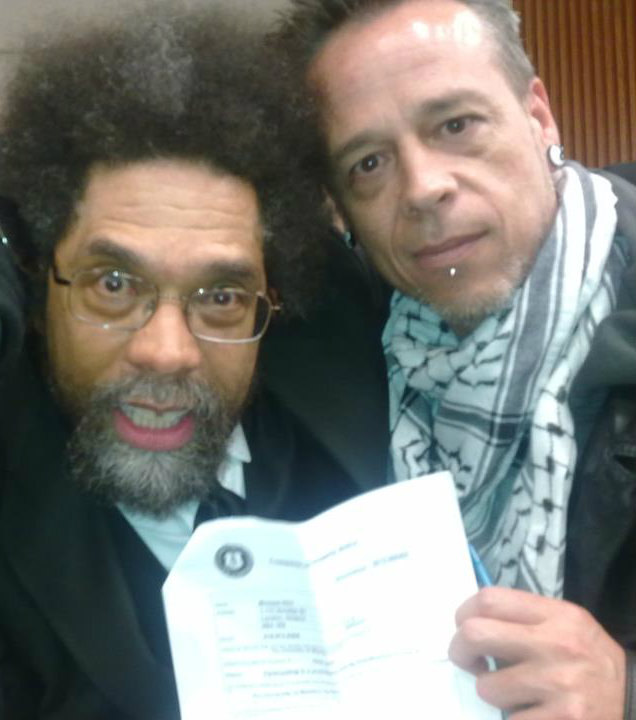
When news of the ban began to spread beyond London, the Canadian Civil Liberties Association (CCLA) felt compelled to issue a public statement, chastising the University for its heavy-handedness and expressing concern “that Western unduly limits the ability to protest on its premises.” Around the same time, Dr. Cornel West, one of North America’s most important and influential public intellectuals, called on Western to reverse the ban, signing a petition to that effect and posing for pictures – on campus, it should be noted – with one of the banned people in a show of solidarity.
At the time, many people in London expected Western’s President, Dr. Amit Chakma, to intervene in the matter. Surely, they thought, it was part of his role as President to ensure that intimidating and arguably thuggish behaviour by the so-called “campus police” would not be allowed to interfere with the academic mission of the University, which is to facilitate and encourage the free exchange of ideas. Dr. Chakma, they hoped, would see the folly of this suppression of free speech on – of all places – a university campus.
So it was that, on April 19 of this year, about 35 members of the campus community visited Dr. Chakma’s office, asking for a meeting. At the time, we were told that he would not meet with us, but that we could leave our names and contact information, and we would be contacted about a meeting. A full 8 days later, we received our emails informing us that Dr. Chakma was “unable to accommodate” any of our requests to meet with him. Moreover, to our shock, University spokespeople began to “double down” on the bans, claiming that “campus safety” had made the bans necessary.
It was, of course, absurd to suggest that participation in a silent vigil constituted a “safety” risk. We nevertheless took some comfort in the statement, in our rejection letters, that “the University is currently undertaking a review of the circumstances surrounding” the bans. We quickly learned, however, that this “review” would only add insult to injury. The University announced its findings – that the bans were appropriate due to safety concerns – without so much as contacting the banned persons, or any of the participants in the silent vigil, to hear their side of the story.
Unfortunately, the University refuses to let this issue drop. Quite rightly, one of the banned persons appeared on campus, on the evening of 13 November, to attend a public lecture by a federal Member of Parliament. While there, the so-called "campus police" arrested him, and took him into custody. In an earlier, similar incident in October, they had forced the same gentleman to leave a public lecture at King’s University College. In none of these cases, including the original incident, had this journalist, dissident and human rights activist done anything remotely dangerous or disruptive.
By now, the pattern has become all too clear. While the Canadian Civil Liberties Association and Dr. Cornel West had probably assumed, as many of us once did, that the initial ban was an aberration, we can now see that it was only one sign of a larger threat to the very nature of the academic enterprise at Western. The so-called “campus police” are being used to interfere with the academic mission of the University, under the protection of Western's Administration. As an academic myself, I admit to being embarrassed by the fact that it has been necessary for the CCLA to explain the nature of the University’s mission to Dr. Chakma, the president of an institution that describes itself as one of “Canada’s leading research-intensive universities.” But it has indeed become necessary.
The Association’s words, quoted in the London Free Press on April 17 of this year <http://www.lfpress.com/news/
Instead of defending this mission, the University has used a squad of club-wielding agents, the so-called “Campus Community Police Service,” to shut down controversial speech, in an absurd and embarrassing attempt to bar expressions of dissent by social justice advocates from the university. Of course, this attempt will fail, as such attempts usually do. But how much further damage will be done to Western’s reputation in the meantime? How many civil liberties organizations and prominent public intellectuals, at home and abroad, will have to chastise Western publicly for its disavowal of its responsibility to facilitate and encourage peaceful discussion of controversial ideas? Many of us have begun to see the need to abolish the “campus police” and to replace this dangerous squad of armed agents, which is so clearly hostile to controversial speech on campus, with an ordinary security service, which would be expressly forbidden to interfere with University’s academic mission. As we begin to organize toward this end, we hope Dr. Chakma will not stand in the way of this necessary reform. This regrettable degeneration of the University has gone far enough. The use of force to shut people up can no longer be tolerated at Western. We need to come together as a community to restore Western’s now-tarnished reputation as a place where freedom of discussion is welcomed and encouraged. (Stephen D’Arcy teaches philosophy at Huron University College.)