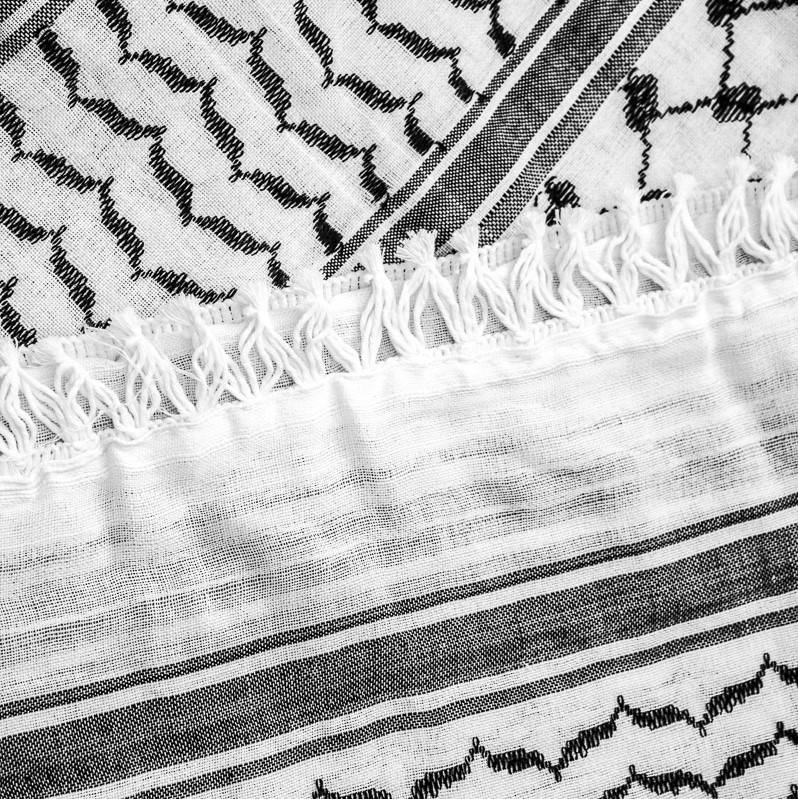
 Black and white Palestinian keffiyeh. Photo: Hirbawi
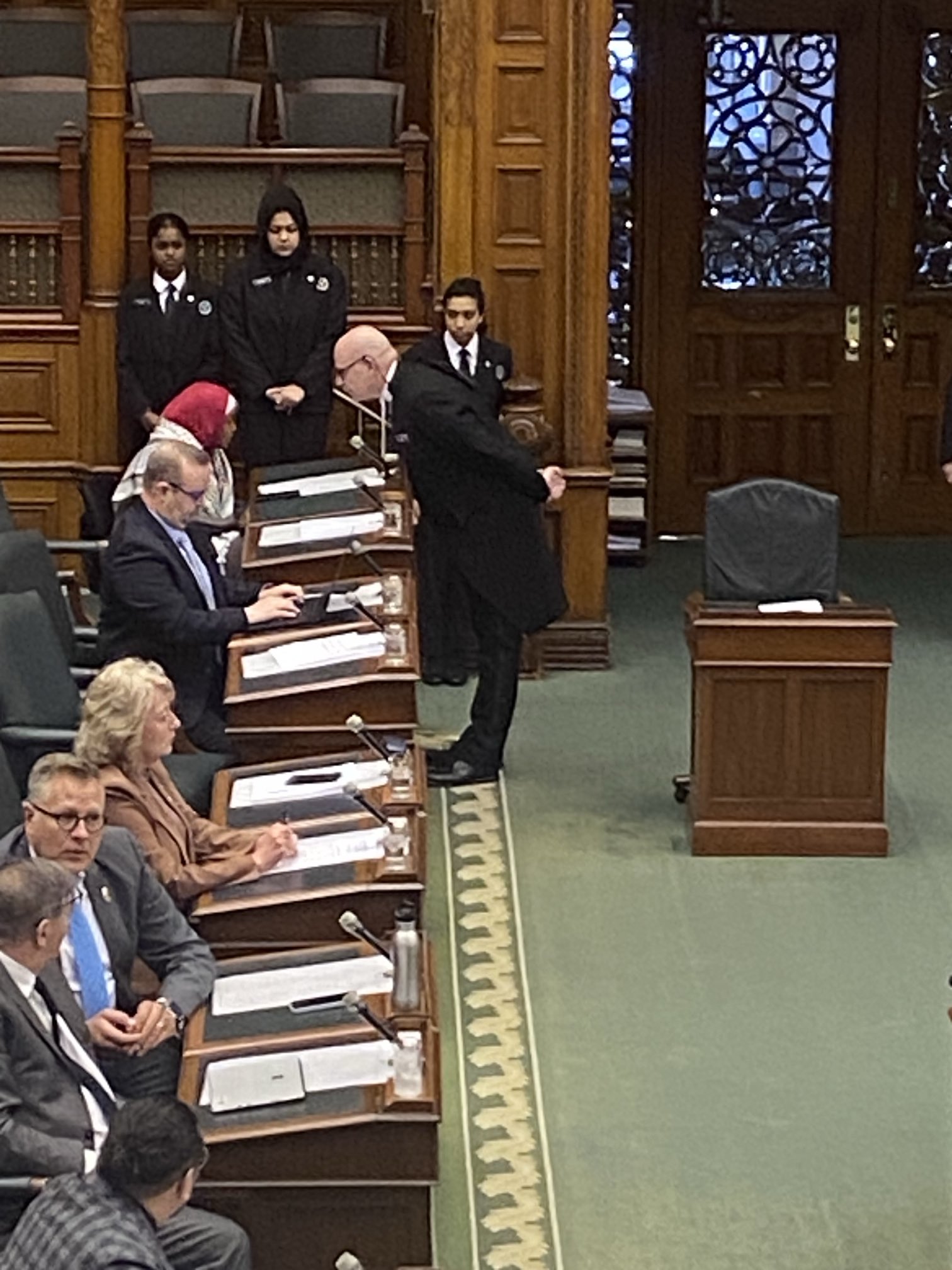
Ontario MPP Sarah Jama's ousting from Ontario's legislative chamber for wearing a keffiyeh, a symbol deemed “overtly political” under Queen's Park regulations, is part of a broader trend of bans, censorship, and suppression.
From state-led censorship such as the U.S. threatening to ban TikTok, to universities attempting to quell dissent through encampment bans and legal maneuvers, the landscape of freedom of expression and right to protest is under siege at multiple levels. This recent event underscores a disturbing pattern where voices advocating for marginalized communities, such as Palestinians, are systematically silenced and excluded.
The Symbolic Violence of the Keffiyeh Ban
In a chilling display of anti-Palestinian racism, MPP Sarah Jama was shamefully ousted from Ontario's legislative chamber for wearing a keffiyeh, which is a symbol of Palestinian identity, culture, and solidarity. Jama used to be in the NDP but was kicked out for calling for a ceasefire in Gaza in October 2023, among other comments.
Speaker Ted Arnott's complicity in enforcing the ban on this cultural garment is a stark reminder of Canada's systemic racism, racial and colonial violence, and its tacit support of Israel's oppressive and genocidal regime.

CAPTION: Sarah Jama (seated left) being told by a staff member of Queen's Park to remove her keffiyeh or leave the legislature. Photo: Kristin Rushowy
The image capturing a legislative page towering over Jama, resembling a scolding figure, epitomizes the institutionalized racism plaguing Canadian politics. Surrounding them are young students, likely participants in Ontario's educational Page Program, their hopeful eyes witnessing a grotesque display of racial violence. Among them, a hijab-wearing girl whose presence reminds that while Canadian political institutions seek to include more marginalized voices, those people are at the same time forced to confront the harsh realities of systemic discrimination and racial violence.
Moreover, the imposing image of the page over Jama takes on an even more sinister dimension when we consider her visible disability. Jama, a disabled person who uses a mobility scooter, was subjected to the physical intimidation of having Arnott lean over her. This blatant disregard for her bodily autonomy and safety underscores the intersecting forms of oppression that marginalized individuals face in their fight for justice and shows of solidarity.
As a Black Nigerian-Canadian first-generation immigrant youth who once saw the possibility of change through politics, witnessing someone like Jama in action on the floor would have been inspiring to me. However, seeing the way she was treated for wearing a keffiyeh would have filled me with rage and shame. This highlights the continued powerlessness of racialized and minoritized people even in positions of some power, and the exacerbating experience of racial trauma.
This image reflects Canada's deafening silence amidst the ongoing genocide of Palestinians perpetrated by the illegitimate state of Israel. By ejecting Jama, Arnott becomes a proxy of Canadian silencing of dissent against Israeli atrocities and enforcer of racial hierarchies.
In recent developments, Queen's Park partially reversed its policy banning keffiyehs. They are still not to be worn in the legislative chamber but can be worn when entering the general building. Other politicians including NDP MPPs Joel Harden and Kristyn Wong-Tam have worn the keffiyeh in solidarity and walked out of the legislative chamber after a warning. MPP Sarah Jama continues to be ejected for her refusal to adhere to the ban.
This decision mirrors a global trend, as seen in the Australian state of Victoria, where a similar ban is enforced, eliciting inquiries from Green Party leaders about the prohibition of keffiyeh scarves worn by MPs. Despite the clarification sought, both houses of the Parliament of Victoria upheld the ban, making it another legislative body worldwide to enforce such a restriction on this symbol of Palestinian identity.
Campus Encampments and the Student Movements for Palestine
University campuses have historically been vital arenas for dissent and solidarity movements. In the past several weeks university and college campuses in the United States and Canada, and across the world have set up encampments demanding boycotting and divestment actions by their college and university administrators. This groundswell of solidarity is particularly powerful given the stark reality that there are no universities left in Palestine, all having been bombed and destroyed by Israel.
As an alum of McGill University, I have seen firsthand how university student spaces are valuable sites for dissent and solidarity, especially in support of Palestine. The encampments sprouting up across campuses are not merely solidarity gestures; they represent resistance against the normalization of colonial and imperial oppression and the erasure of Palestinian identity and people.
We have witnessed a disturbing escalation of violence and repression against those advocating for Palestinian rights. University administrations, instead of fostering dialogue and understanding, have resorted to threats of expulsion, cancellation of graduation ceremonies, applying for injunctions, and even inviting violent confrontations with police, many of whom have been donning paramilitary gear on various campuses. Some universities, including the University of Toronto, even went so far as to put fences up around campus green spaces in an unsuccessful attempt to deter the organization of encampments.
Universities across Canada have witnessed heightened tensions as police forcefully dismantled encampments established in solidarity with Palestine. Instances at the University of Calgary and the University of Alberta, where encampments were violently cleared, highlight the escalating crackdown on pro-Palestinian solidarity actions. McGill University has repeatedly attempted to obtain injunctions for the removal of it’s on-campus encampment before convocation ceremonies commence in June. Nevertheless, students’ steadfast commitment emphasizes the resilience of student-led movements in challenging institutional suppression of Palestinian solidarity efforts.
We must not overlook the enduring legacy of student protest movements throughout history. From the anti-war protests during the Vietnam era to the calls for Apartheid divestment, the Soweto Youth Uprising, and the tide-changing moments like Tiananmen Square and the Civil Rights Movement, students have often been at the forefront of societal change. Even more recent examples, such as the protests following the 1999 raids and arrests at the University of Tehran, underscore the pivotal role students play in shaping the course of history.
The very institutions that should be nurturing critical thinking and activism are suppressing it, revealing the entrenched power structures at play. Moreover, recent attempts to suppress solidarity with Palestine through encampment bans, violent clearings, and legal actions reveal the determined attempts at the erosion of this critical space for activism. University administrators and politicians have long sought to limit political activity on campuses, making it a constant struggle to protect these spaces for free expression and advocacy.
The encampments come at a time when recent news of Shaymaa Alareer's killing in an Israeli airstrike adds another layer of anguish. The daughter of acclaimed poet and professor Refaat Alareer, Shaymaa's tragic killing, along with her husband and infant son, is a stark reminder of the relentless violence inflicted upon Palestinian families. Her death comes less than five months after her father was killed by Israel.
Amid this horror, social media has become a lifeline for those directly impacted by the violence. Tweets like @itslaylas', detailing the loss of 14 family members in Gaza, cut through the numbing statistics and political rhetoric to reveal the human toll of this genocide. The decimation of entire family lines lays bare the genocidal nature of Israel's actions, as it continues to act with impunity and without remorse.
The TikTok Ban and Information Control
We must also confront the disturbing trend of censorship and information control. The recent legislation in the U.S. which could soon ban TikTok there is a bleak example of this, as the platform has served as a crucial source of information and education about the ongoing genocide in Palestine. TikTok has provided a platform for Palestinians to share their stories, inform, and educate directly from the ground, in refugee camps, and from the exiled diaspora. It has also been used to document war crimes by Zionist Israeli Occupation Force (Israeli 'Defence' Force) members, forming crucial evidence in international hearings on genocide.
The ban on TikTok is not a coincidence. It is a calculated attempt to silence dissent and control the narrative. This is a classic tactic employed by states when they want to overreach and commit heinous crimes without accountability. It exemplifies the lengths to which states will go to suppress information and global support for Palestinians. We must remain vigilant against such censorship attempts to suppress information and global support and continue to amplify the voices of those fighting for justice in Palestine and beyond.
Acts of Solidarity are Vital Expressions of Resistance
It is crucial to recognize that what politicians or university administrators do will not stop Palestinian solidarity efforts.
To wear a keffiyeh is a statement of Palestinian resistance and solidarity. We are seeing in real-time a rapidly increasing death toll and complete destruction of Palestinian territory, underscoring the continued need for more political action and sacrifice by those of us outside of Palestine. Resistance and solidarity is not abstract, it is the defining line between life and death for Palestinians. We are finally seeing a changing tide in general public consensus, with countries recalling their ambassadors from Israel and more nations recognizing Palestine as a state. Though not an end to the genocide, such actions can offer hope and the assurance that Israel will eventually face repercussions for its actions.
As individuals in the Global North, we must leverage our platforms and privilege to amplify Palestinian voices and push for the end of genocide and the return of the land to the people of Palestine. Whether it is through organizing protests or encampments, sharing information on social media, engaging in boycotts, or supporting grassroots initiatives, we all have a role to play in dismantling the structures of oppression that perpetuate violence and inequality.
Palestine will be free in our lifetime.