
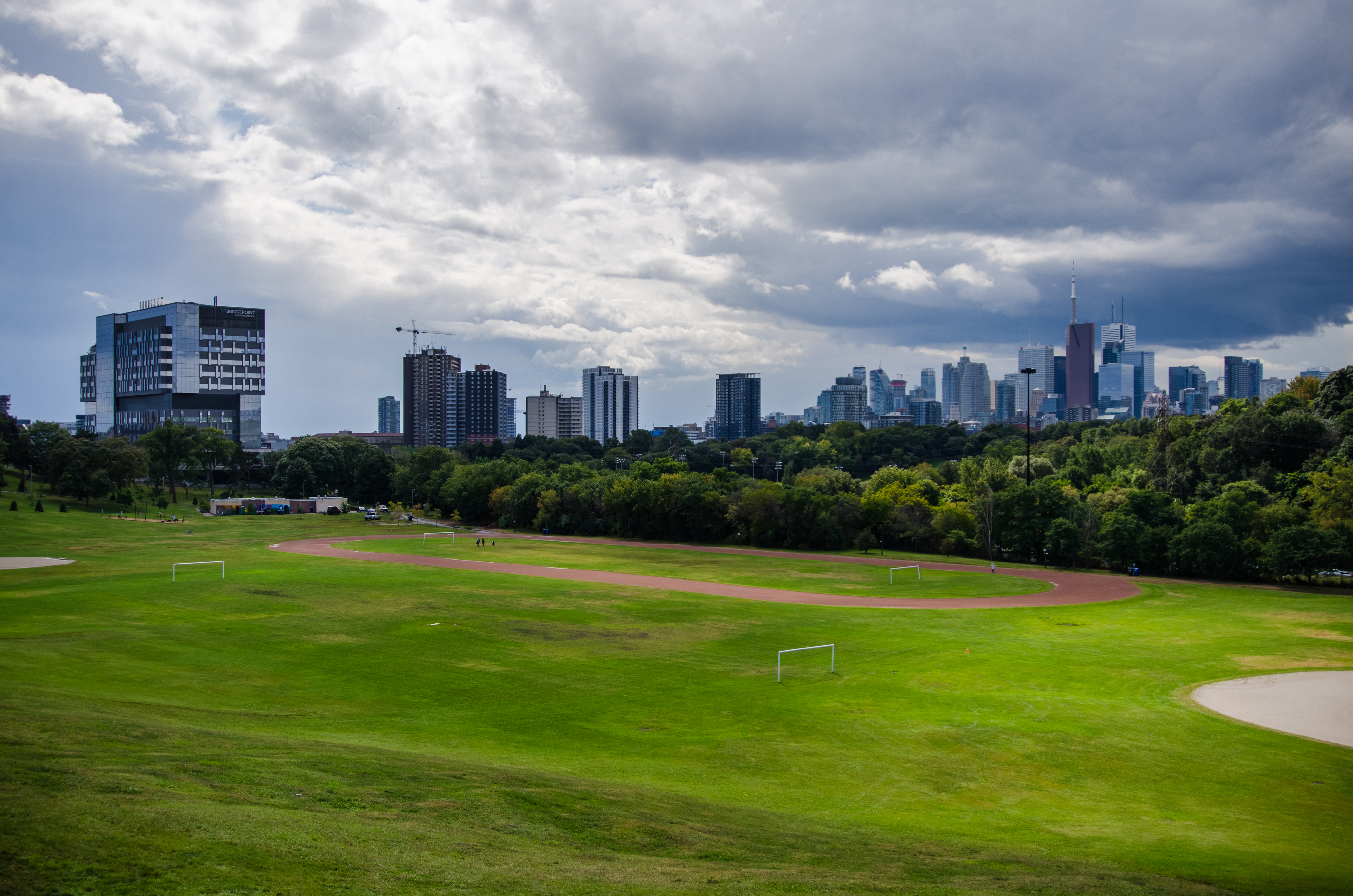
 East Riverdale Park in Toronto. Photo by Jeff Hitchcock, Arbron on Flickr.
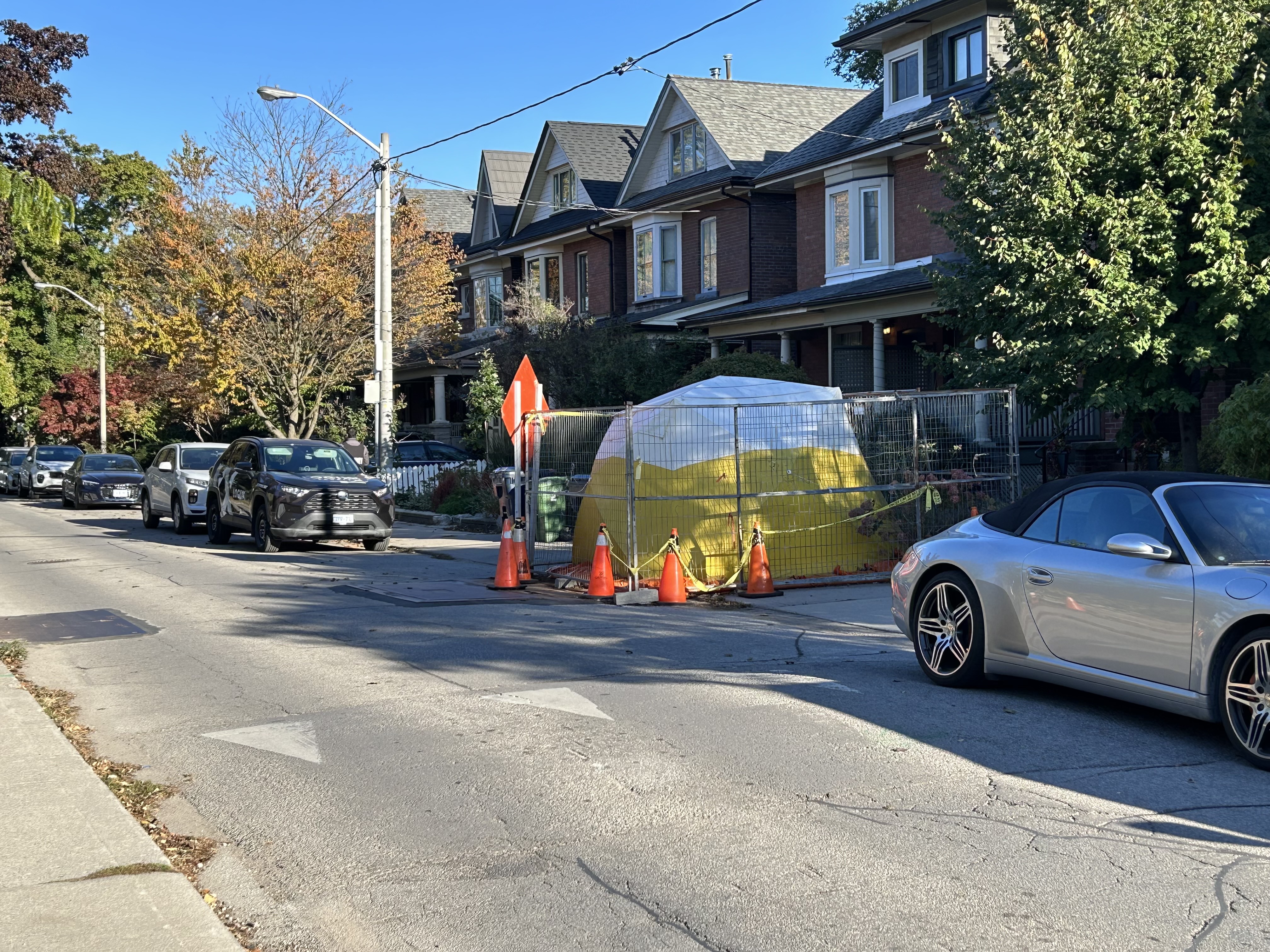
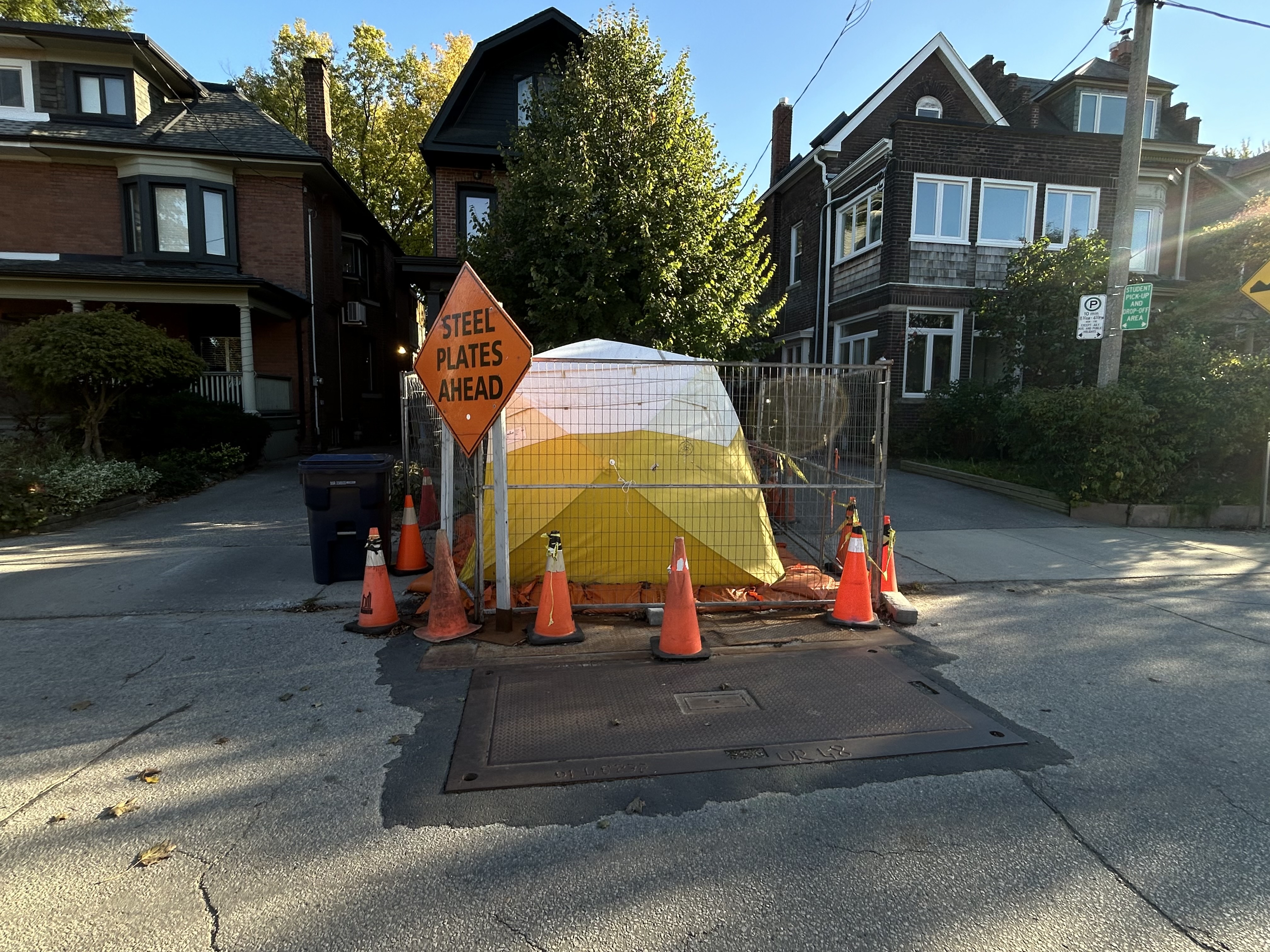
Buried underneath what is today the relatively affluent Toronto neighborhood of Riverdale, near the intersection of Broadview and Withrow avenues, are the remains of Indigenous peoples who lived in the area for thousands of years before European contact.
Although archaeologists have been aware of the site, known as the Withrow Site, and its significance since at least 1884, the site received renewed media attention in January of this year when a construction company was called to repair a plumbing line underneath the road and unintentionally uncovered more human remains at the site. Archaeologist Greg Olson, who examined the site, strongly believes the people buried here are Wendat.

Additional human remains were found in winter 2024 at another part of the Withrow Site in Riverdale on Withrow Avenue. Photo: Tarek Yousef Tahan.
However, when I contacted the band office of Wendake, a Wendat First Nation located in Quebec, senior advisor Rose-Marie Antoinette responded by email saying “It is still impossible to confirm whether or not the remains belong to the Wendat people,” noting that the process of determining ancient remains’ ethnic origins can take several months.
However, this is no isolated incident, as dozens of archaeological sites dot the Greater Toronto Area (GTA), many belonging to the Wendat Confederacy pre-1649, and others belonging to the Haudenosaunee and Anishinabe.
The Wendat Confederacy united the bear, deer, cord, and rock tribes, and stretched between Georgian Bay, Lake Simcoe, and two-thirds of northern Lake Ontario before 1649. After that time, the confederacy, backed by France, was displaced from this region by the Haudenosaunee Confederacy, the British, and the Dutch. The survivors, along with displaced refugees from other neighbouring confederacies, were either taken as prisoners of war by the Haudenosaunee or fled to Christian Island (Gahoendoe, in Wendat language), then to Quebec or to Mackinac Island in Michigan. From Mackinac Island, they fled to Detroit and were further displaced to Ohio, Kansas and Oklahoma.
NOTE ON TERMINOLOGY: Although Huron-Wendat is often used for this group, the term Huron has pejorative origins, stemming from the word “hure,” meaning “boar” in old French, in reference to Wendat people's hairstyle. However, Wendat is used by the Wendat Nation in Quebec, roughly translating to “people of the peninsula” while their descendants in the United States prefer the term Wyandot, an Anglicized spelling of the same name. This article largely uses the term Wendat.
Someone of Wendat ancestry who grew up in Toronto spoke to the Media Co-op for this article on the condition of anonymity. We are referring to her as X. She says, “Tragically, the making and construction of roads and buildings over burial sites is part of a long history of the obliteration or desecration of some ancestrally significant sites.” That practice, she says, “has been consistent across Turtle Island [North America] and beyond”.
She commends “the immediate response” of contemporary Indigenous communities in Toronto who honored the buried the (likely Wendat) ancestors' spirits at Withrow Park by lighting candles, singing songs and offering customary dried tobacco. She points to this as part of an obligation these communities feel towards protecting and honoring burial sites, regardless of which ethnic group they belong to. A professor and friend of C’s laid dried tobacco leaves on the site on her behalf as she could not make it due to mobility issues.
Colonial mindsets in Toronto archaeology
However, burial sites have not always been respected. Greg Baun, a European-Canadian archaeologist with the Ontario Archaeological Society, notes that until relatively recently, the practice of archaeology in the Greater Toronto Area was “overtly colonial,” with a trophy-collecting mentality. Collecting Indigenous skeletal remains for entertainment or display was disturbingly widespread.
More protection was needed before the Ontario Heritage Act was passed in 1974 to enforce regulations for protecting archaeological artifacts and antiquities. Although much of what happened to Toronto’s archaeological sites before 1974 remains shrouded in mystery, written records and notes left behind by antiquities collectors and archaeologists during this period provide some indication. Baun cites records produced by Victor A Konrad, who was a graduate student in the Geography Department of York University at the time that used a $4000 grant to the University to compile reports in 1972 and 1973, which were amongst the first semi-comprehensive studies of Wendat village sites. In the reports, Konrad documented many instances of disturbance and destruction of these sites.
Baun explains how when the Withrow Site was first found in 1884, written records at the time described people “rushing to collect skulls” and talking about how collectors and archaeologists “would place them on their desks, in their offices,” including at the office of the newspaper that reported on it. The head of that newspaper even passed them on to someone else upon leaving that office.
“This is how they describe it in their writings. There is no shame about it, they do not see it as anything wrong,” Baun says.
Beyond these writings, Baun made a disturbing discovery during one month-long assessment a few years ago on a site in Toronto’s Niagara neighbourhood, just north of Forth York. A homeowner of a house adjacent to the site — who Baun declined to name — aroused his suspicions when he told Baun that he had some “things” in his basement. While the homeowner was initially reluctant to reveal what in particular he had, Baun eventually pressed the matter far enough that the man confessed to having Indigenous human remains in his basement. The man claimed to have dug the remains out of a basement down the street from his house and kept them as a collection. Baun threatened him with legal action if he did not hand over the remains, as looting antiquities is considered a criminal offence in Canada. The man eventually gave in and the remains were re-buried by Wendat customs and oversight.
“The way in which you do that [collect someone's human remains and keep them as trophies] is when you dehumanize those people,” says Baun. He explains such practices stem from deeply entrenched beliefs in Canadian society since the colonial era, as Indigenous peoples were seen by early European settlers as “essentially stuck in place, timeless, and in decline.” The view was that their decline was “meant to be” and early colonizers viewed themselves as “racially superior.” Baun notes that this mentality only began to be pushed out of the mainstream during the 20th century.
“I think part of the reason why we, as a society, are not very aware of the Indigenous history of this place [Toronto] is because it makes us uncomfortable,” he says.
X largely agrees with Baun’s findings, saying, “There are all kinds of stories of people reassembling skeletons in their living rooms and people having collections of Wendat [clay] pots and things in their basements.”
“Even in my work in High Park [in Toronto], I was told that people would come down after rainstorms and dig in spaces that are considered burial spaces or other places of significance in the park,” X explains “It saddens me greatly because if you travel to other places in the world where there are burial spaces, those places are protected,” referencing her recent travels overseas.
Where are these archaeological sites located?
“If you look at a map of known sites, Toronto proper is a big black hole where there's almost nothing,” Baun says. Most sites surround this black hole in its peripheral regions, such as Scarborough, Markham, Pickering and Vaughan.

A large burial site in Scarborough near Bellamy and Lawrence. Photo: Tarek Yousef Tahan.

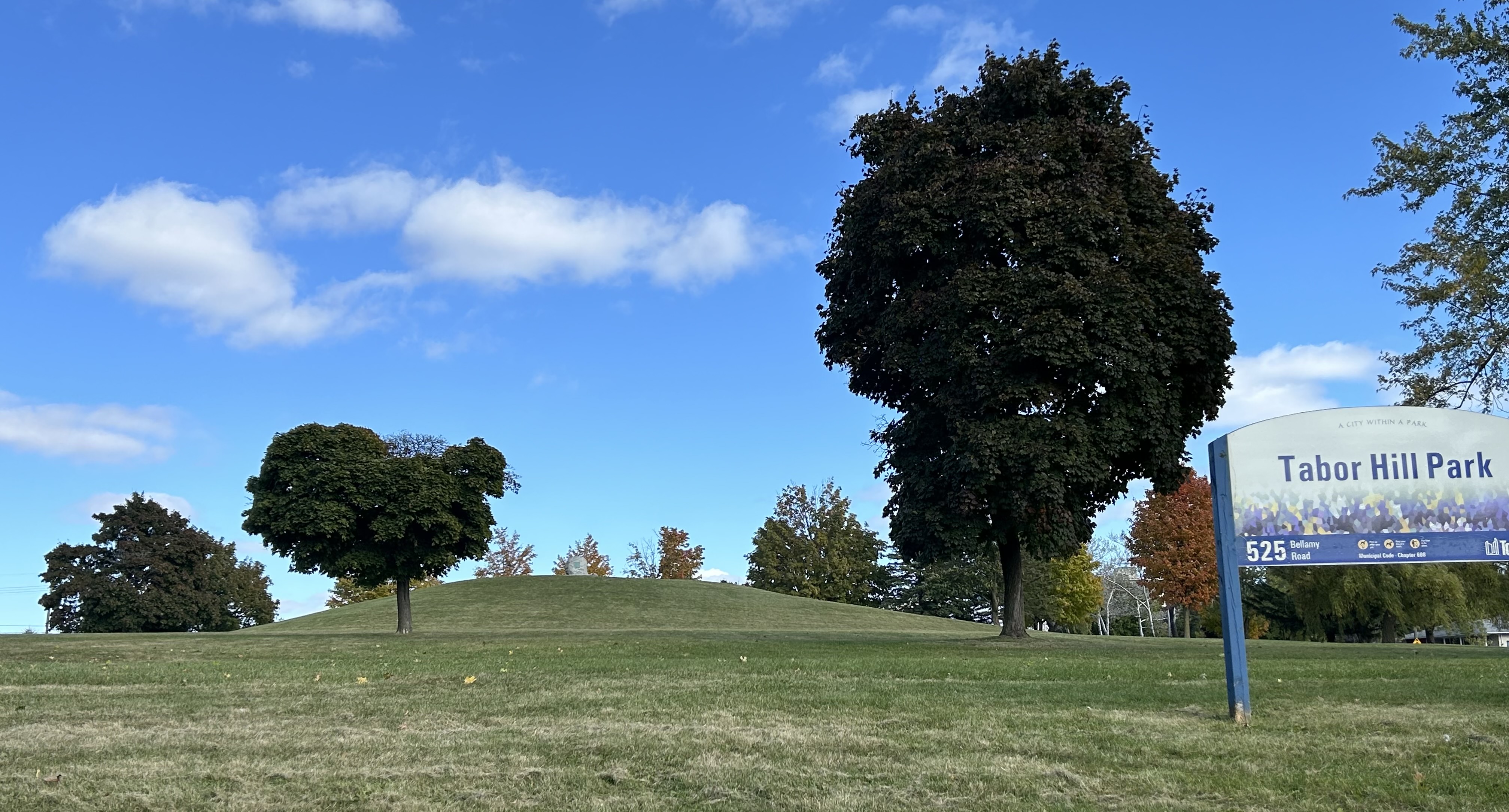
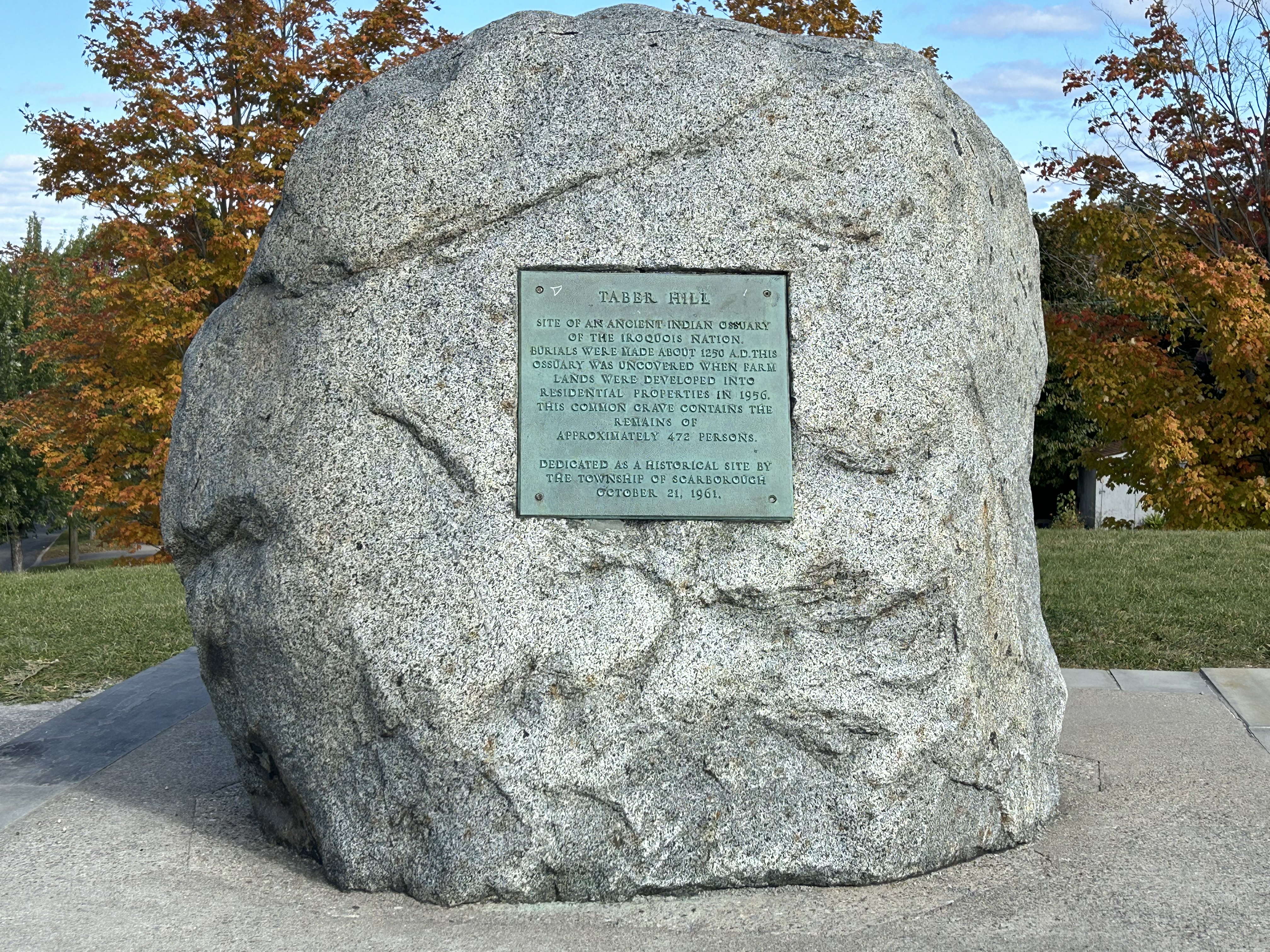
Plaque at Tabor Hill burial site in Scarborough. Photo: Tarek Yousef Tahan.
Baun adds that most known archaeological sites are located near major river drainages like Duffins Creek, the Rouge River, the Don River and some on the Credit River. This is partly because the Wendat preferred to build their settlements near rivers to better suit their agricultural, fishing and transportation needs.
However, this may not accurately describe where human remains were buried before European settlement started in the area. This is because many sites closer to downtown were disturbed without many records being kept before 1974 and the passage of the Ontario Heritage Act. The Ontario Heritage Act requires that any activity that disturbed soils in a given area triggers an archaeological assessment to determine whether or not a site was present.
Baun also mentions that Canadian universities and museums, “were collectors of things [artifacts and human remains] for decades,” long before 1974, many of which still hold them until today.
A 2018 Toronto Star investigation revealed that dozens of artifacts collected over the years, many from Toronto, also remain stored in bankers’ boxes, garages, basements and lockers of archaeologists and looters alike.
This phenomenon is not unique to Toronto. For example, after decades of advocacy, the remains of two Beothuk individuals were repatriated to Newfoundland from a museum in Scotland in 2020
In Toronto, most land development happened in the “416” city center region during its early stages of urbanization, during which almost all remaining Indigenous structures were destroyed, save for a few burial mounds, such as Tabor Hill in Scarborough.
Baun says that, as per the 1974 act, archaeological work generally begins with surveying the land. If any sites are found, archaeologists then conduct test excavations to determine their significance before full excavations. This is how most historic Wendat villages and burial sites are found today.
However, he explains that part of the reason these archaeological sites are not intact is that by the time a land development process has triggered an archaeological assessment and the site is found, much of it is already dug up.
Baun says that prior to and after the 1974 act, “Developers often opt to fully excavate the site instead of preserving and protecting the site well in advance of their development.”
Baun points to certain loopholes of this legislation that hinder the effectiveness of its regulations when dealing with antiquities and archaeological sites. While archaeological practice and ethos have evolved considerably over the years and now emphasize respecting and prioritizing the wishes of First Nations, he explains that archaeologists often feel pressured to balance those wishes with those of real estate developers or municipalities who legally own the land the sites sit on, which often diverge from First Nations’ priorities. Indeed, critics of the legislation believe that it is more effective in delaying rather than preventing corporate and municipal demolition of cultural heritage.
He explains that archaeologists are generally able to recreate sites by taking measurements of stains on the ground and recording observations of remaining artifacts that were not looted through methods such as carbon dating.
Baun notes, however, that at nearly all sites, the physical structures, such as dwellings, are gone. He in part also attributes this to the fact that Wendats and other Indigenous civilizations “lived lightly” off the lands that now comprise the GTA, and they were semi-nomadic. Typically, he says, they may have occupied a village for between 15 and 30 years before deconstructing it and moving to a new area, while taking some materials with them, once an area’s soil fertility had declined. Moreover, in contrast to other civilizations that built structures using stone, such as the Mayans and those in the Near East, the Wendat often sourced material like wood, which, without continuous maintenance, bio-degrades over time.
As regards Greg Baun's assertion of a “black hole” in Toronto archaeology, X provides further historical context, saying that by the late 16th century, while the Wendat confederacy continued to control northern Lake Ontario, settlement began to concentrate closer to the Georgian Bay area, most likely to avoid their enemies and take advantage of trade routes with their neighbouring Anishinaabe allies. X also recounts readings and discussions describing how during the colonial era, French Jesuit missionaries destroyed many spiritually sacred spaces of Indigenous peoples in their efforts to convert them to Christianity.
The politics of archaeology and the QEW
Carolyn King, from the Mississaugas of the Credit First Nation, points to the controversial Toronto Purchase Treaty signed by her tribes’ chiefs and the British Crown in 1805 that covers much of what is now the Greater Toronto Area.
King explains that the treaty omits Indigenous territorial boundaries, and Indigenous concerns are often sidelined to a federal, not provincial, responsibility. This dubious land demarcation makes it more difficult for First Nations like the Wendat and the Mississaugas to protect their archaeological sites from desecration. It was only after years of advocacy that the Supreme Court finally ruled on the legal duty to consult First Nations, King says, noting that, “We had to fight to get to even to be talked to.”
King also describes instances of desecration of burial sites at a former Christian mission site for Mississauga Ojibwes at the Mississauga Golf and Country Club near the Queen Elizabeth Way (QEW) southwest of Hurontario Street.
She explains how archaeological work began in the area in preparation for the future golf course in the early 20th century after the Mississaugas were relocated to Hagersville, near Hamilton, in 1847. During excavations on the site, human remains of the Mississauga-Ojibwes’ ancestors were found buried there.
She mentions that the QEW was moved closer to its present location as urban expansion began in the area during the 1960s. During the village site's archaeological assessment, archaeologists collected finger bones, scapula-beaded necklaces, and other items from the eastern side of the road and placed them in bags before representatives of her people could perform spiritual ceremonies for their dead per their burial customs.
“All of our stuff has been dug up and paved over,“ she says, adding, “When I drive over … the credit River and 16 Mile Creek and Etobicoke Creek, I say hello to the ancestors, and ‘I'm sorry, that happened to you, but we are working on not having that happen again.’”
Competing claims over treaty land inheritance between First Nations sometimes extend to cultural heritage. For example, King claims that some people from the Six Nations of the Grand River near Brantford, Ontario, would, “claim the Wendat lands and their artifacts” as theirs.
What has changed?
Archaeological mismanagement is not universal. Baun notes, that certain institutions enact regulations that he considers “above and beyond” provincial standards and guidelines. One example is Rouge National Urban Park, which was established in 2015. The park straddles Scarborough and other GTA municipalities, and it closed its archaeological sites to the public, such as Bead Hill, which belongs to the Seneca (who are part of the Haudenosaunee Confederacy). As such, Baun, who has worked on these sites, declined to share more information, citing an official code that seeks to protect them from looters.
He says there is a slow yet ongoing repatriation process of remains which were taken over the years without the consent of their communities. The most notable example was in 2013, when the University of Toronto conducted a large repatriation ceremony of human remains to the Wendat Nation in Quebec in the presence of their representatives and through their “reinterment” burial and mortuary custom.
X considers instances like these as part of “an deepening of consciousness” that Indigenous people have been working for years to bring about. She also expresses delight in other positive improvements in archaeological practices, such as the presence of Wendat archaeological monitors who must be present during site excavations. She also points out how archaeology, however disruptive it can be, has at times helped her people learn more about their past that would have otherwise been obscure.
“It's a mixed blessing in some ways,” she adds.
X strives to honour her ancestral spaces through her artwork in the city and beyond. “We all have to honour our ancestors to move forward together as people.”
Despite the historical mismanagement of their archaeological artifacts and human remains, the efforts of X and others prove that Indigenous peoples remain resilient and determined to safeguard their legacies and cultural heritage.
EDITOR'S NOTE, OCT 31, 2024: Several minor edits have been made to this article for accuracy and clarity.