
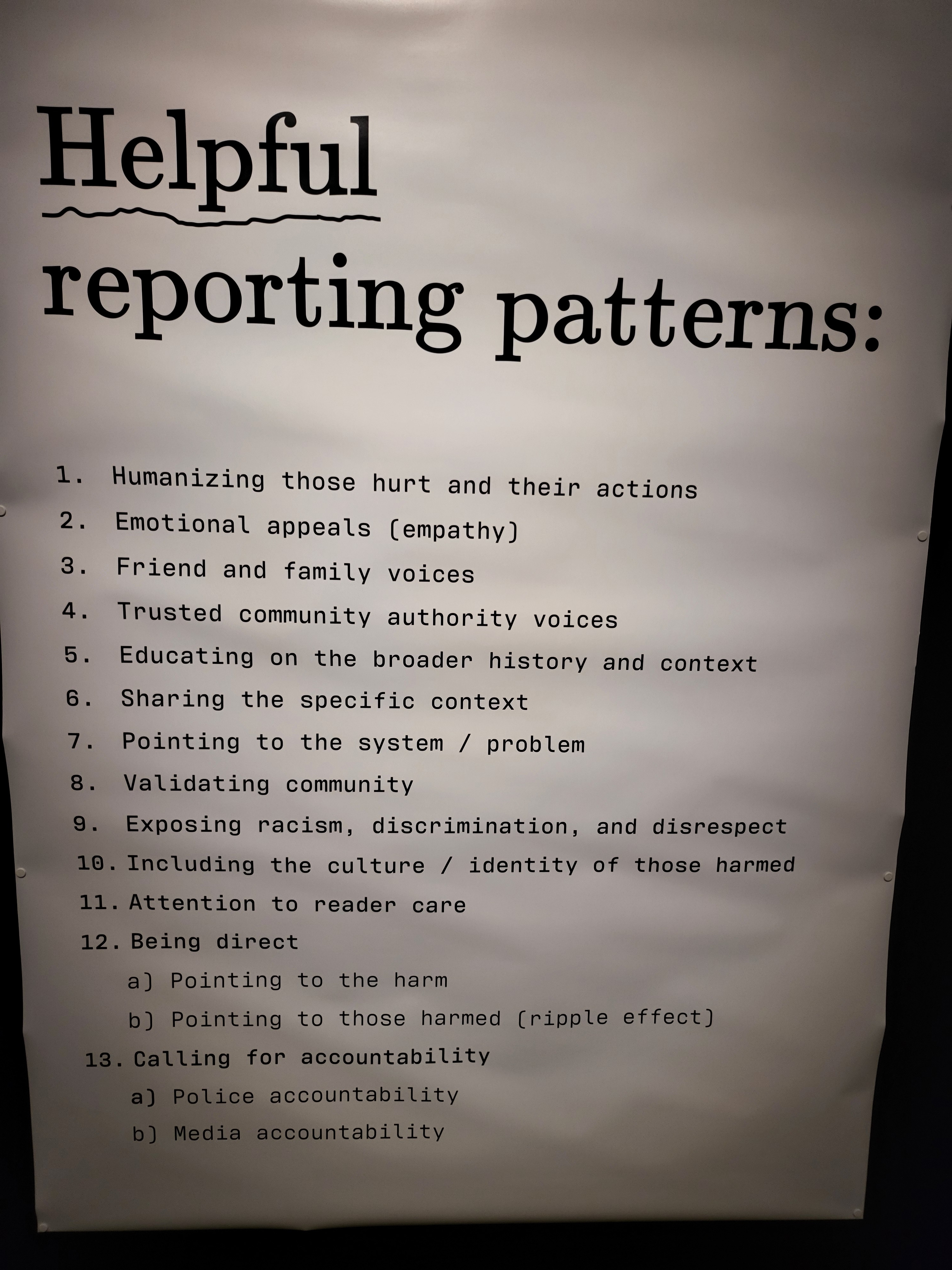
 Helpful reporting patterns.
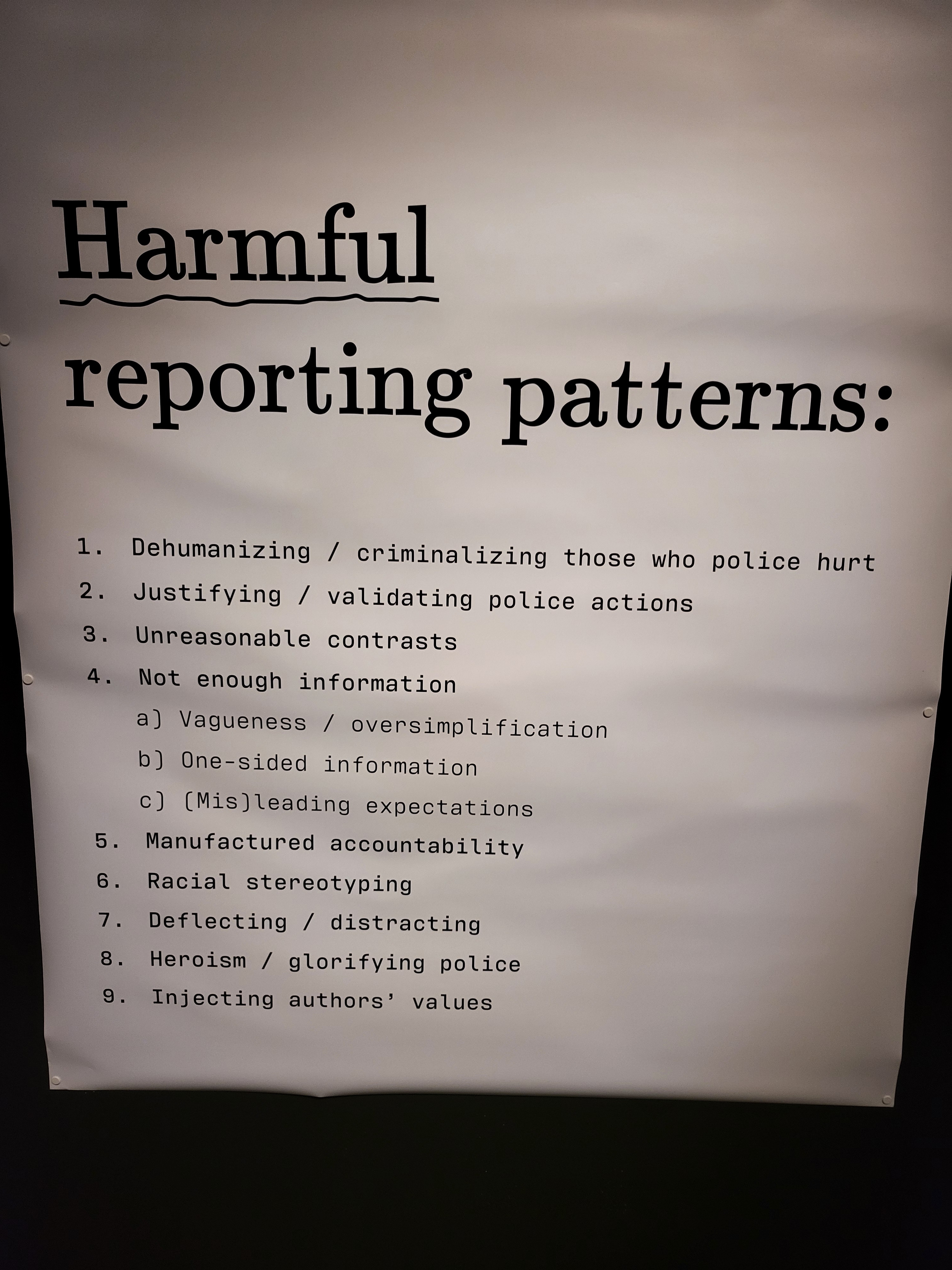 Harmful reporting patterns.
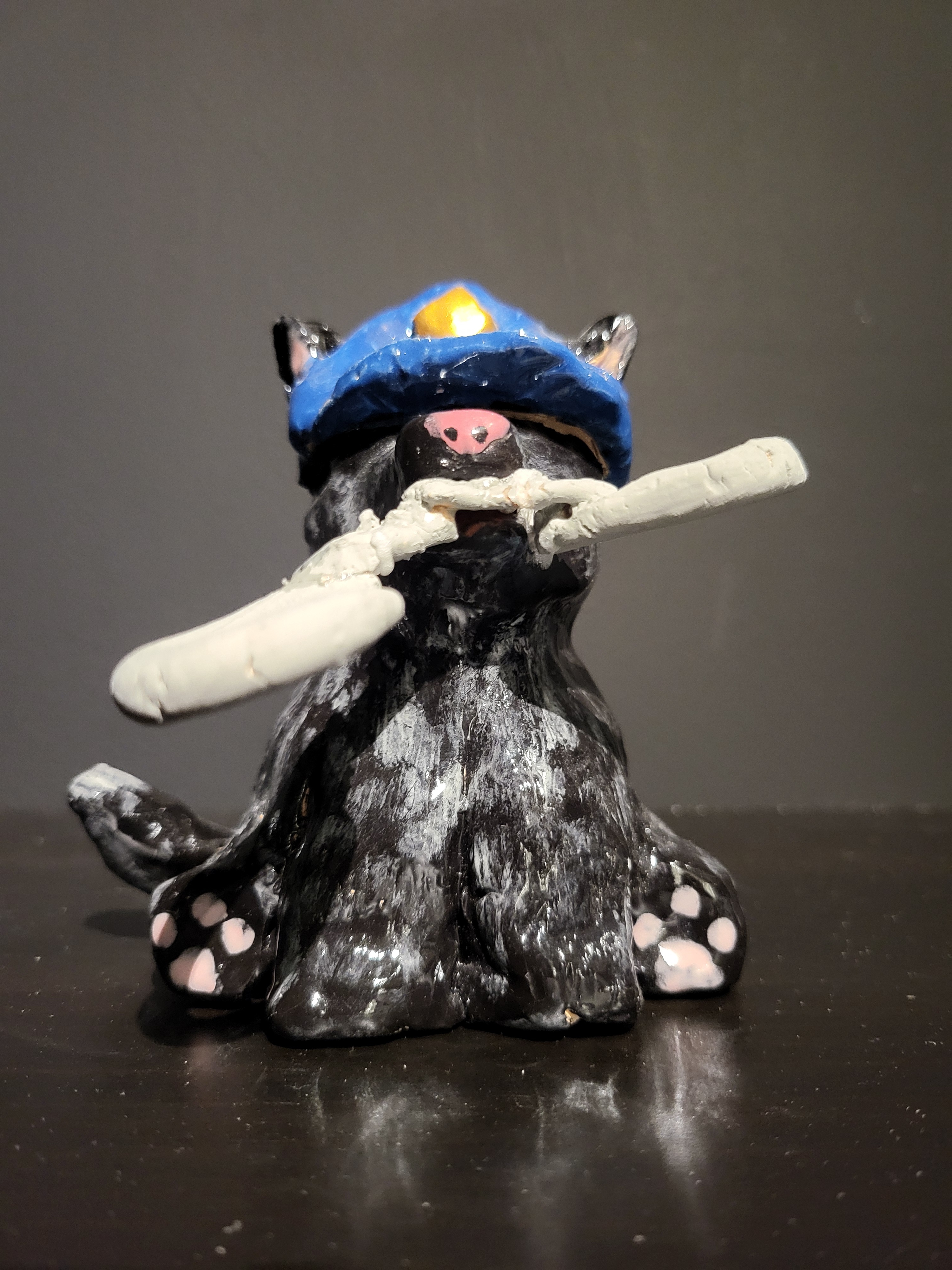 Police dog ceramic scupture.
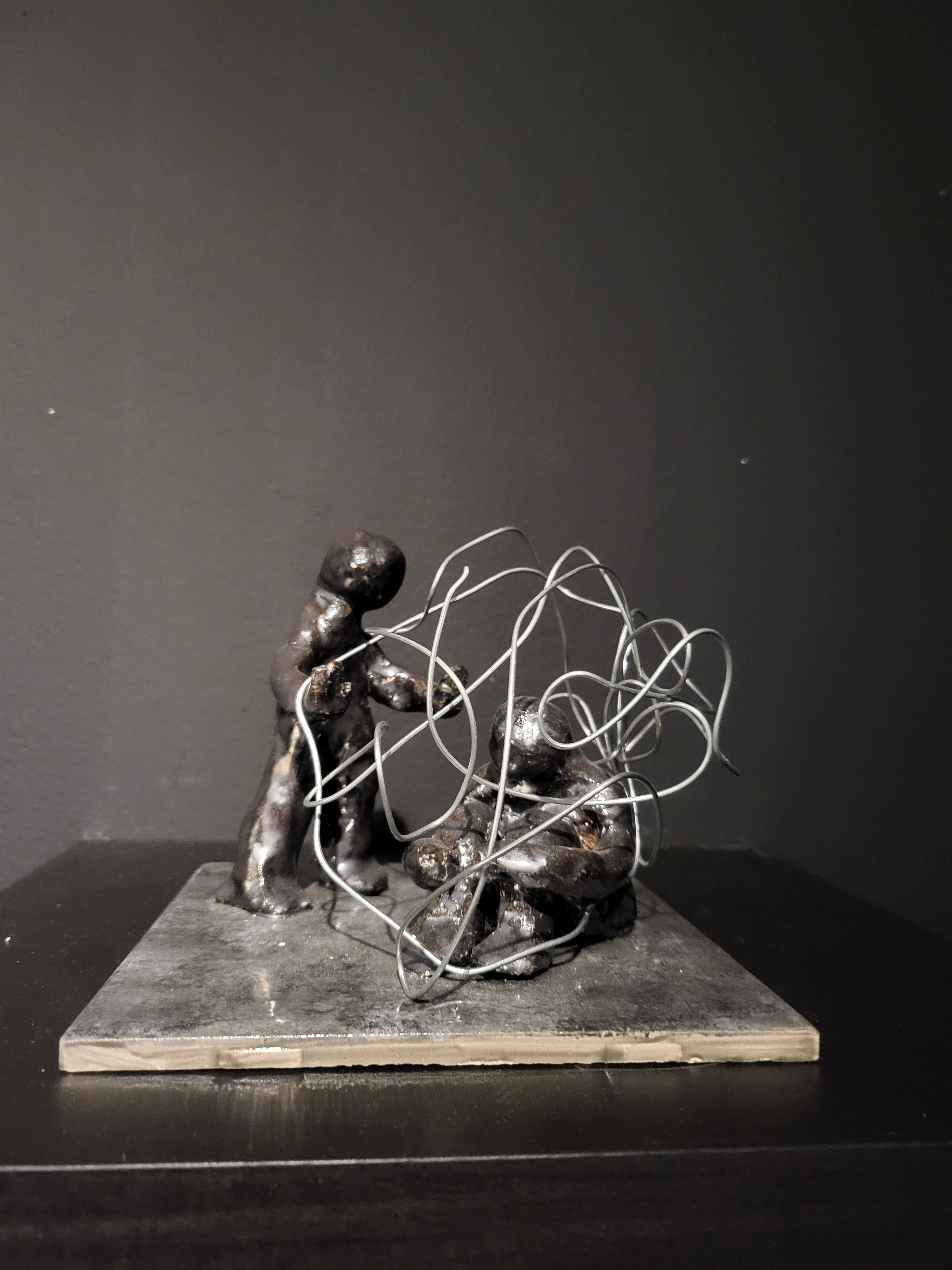 Two people entwined sculpture.
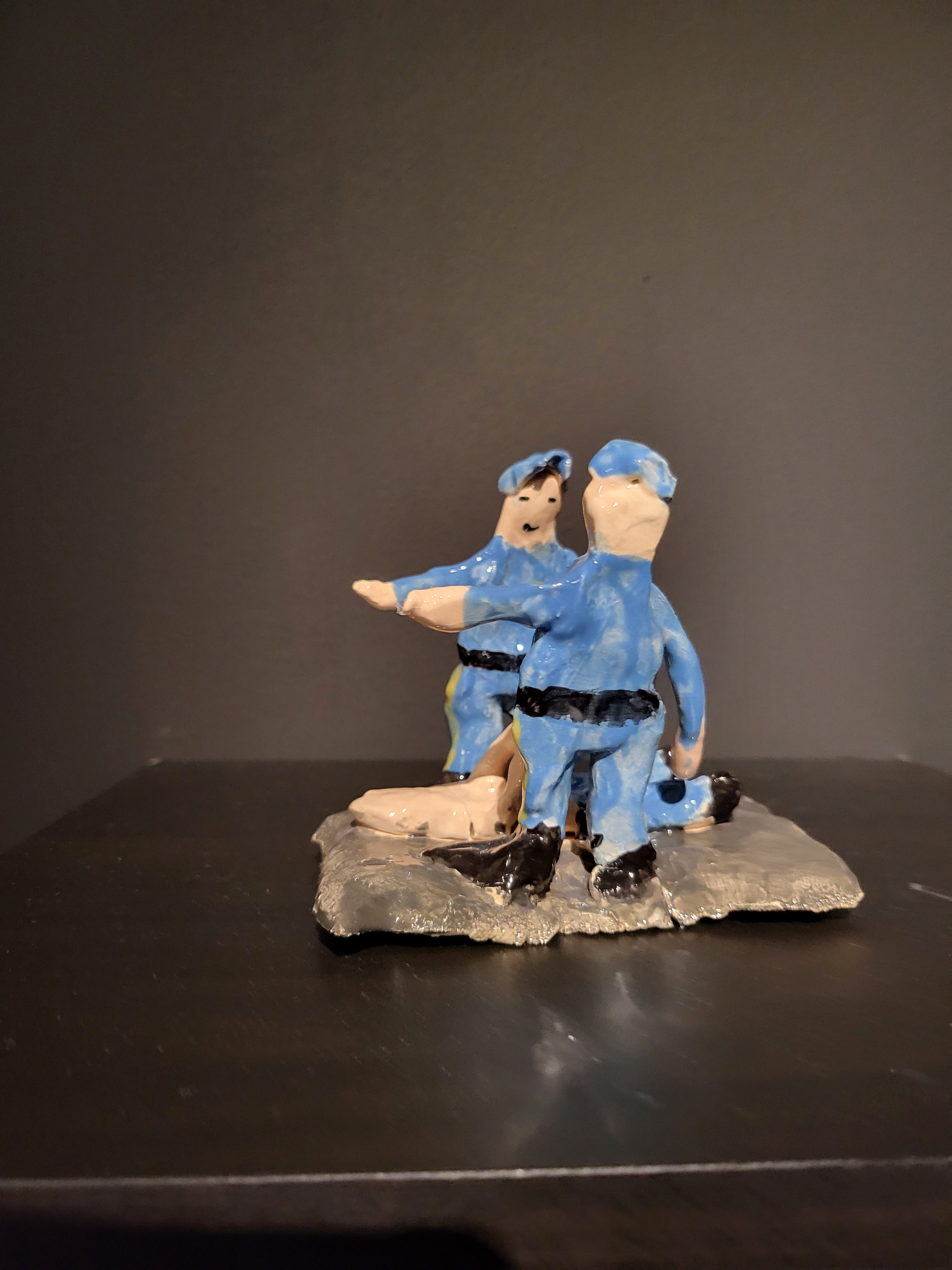 Two cops standing over person on ground sculture.
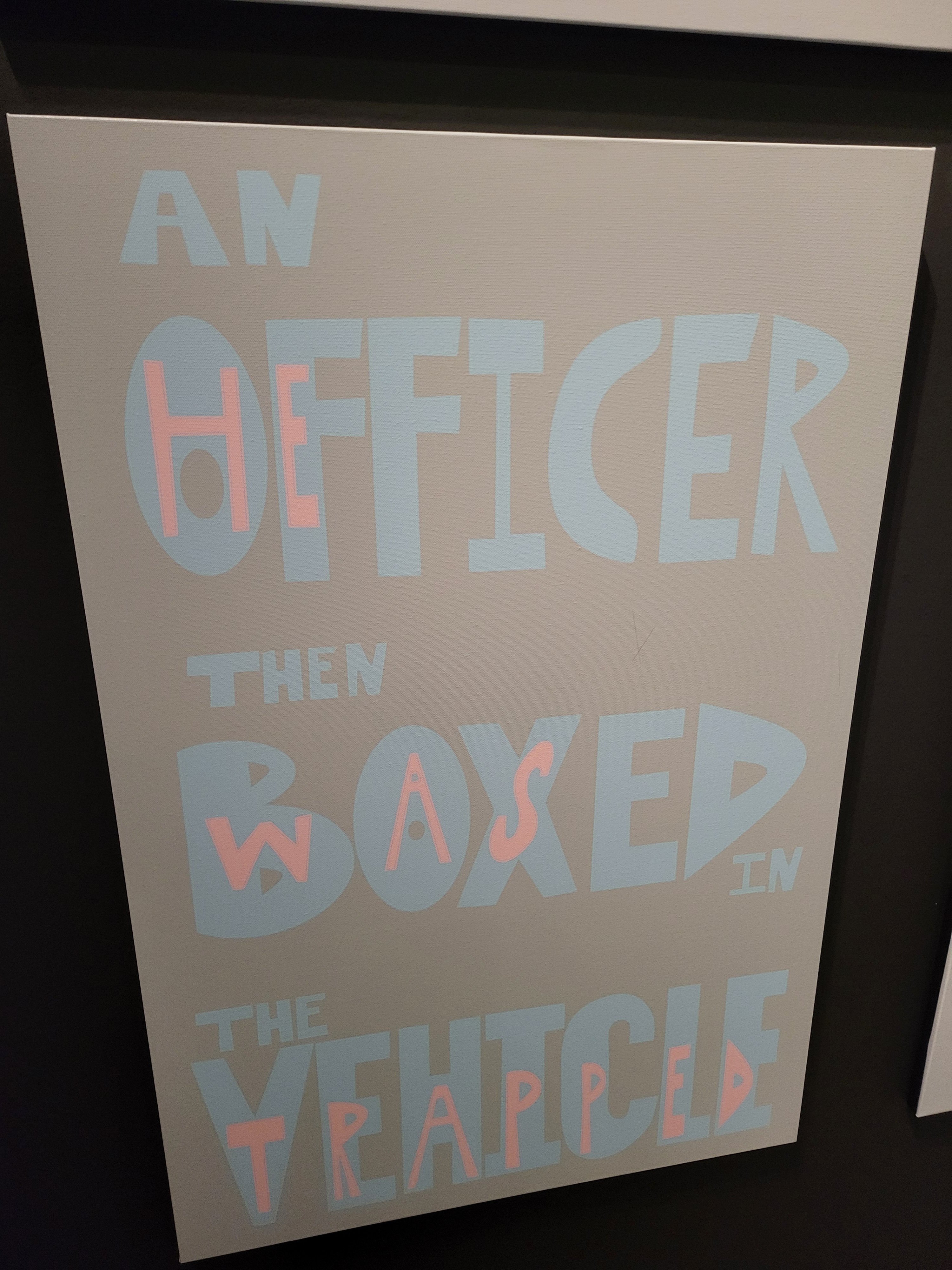 He was trapped/An officer then boxed the vehicle.
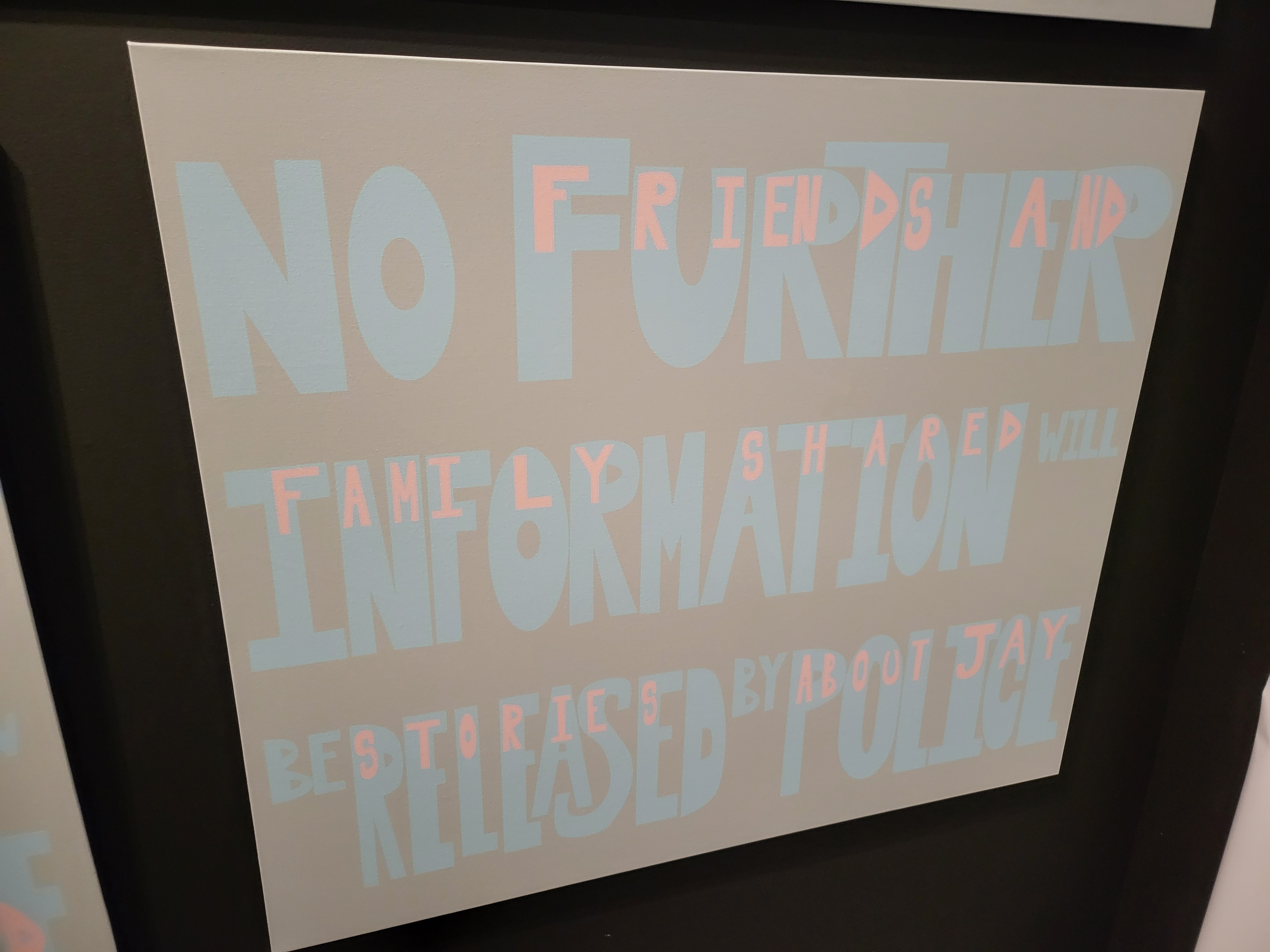 Friends and families shared stories about Jay/No further information will be released by police
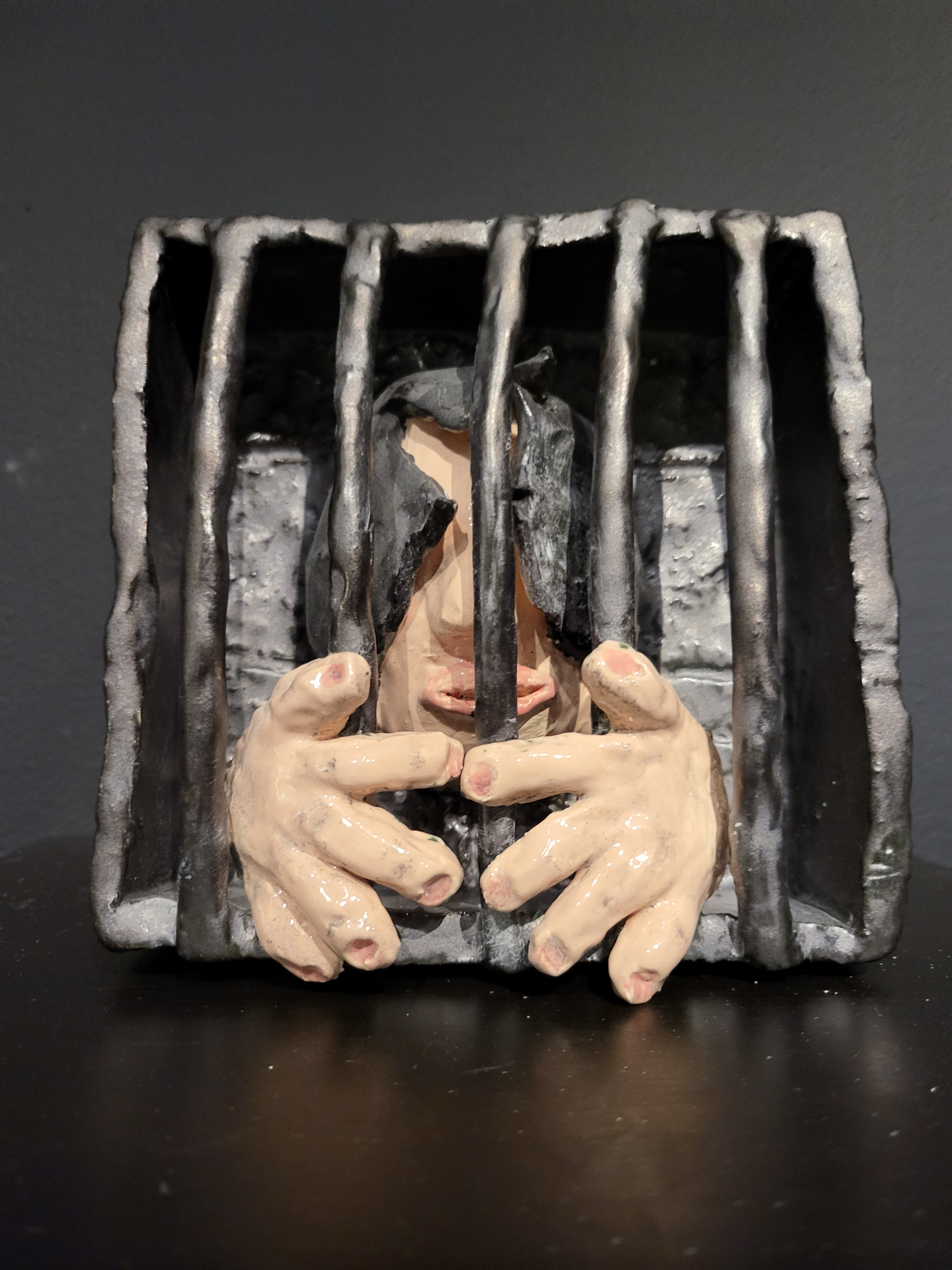 Person in cage sculpture.
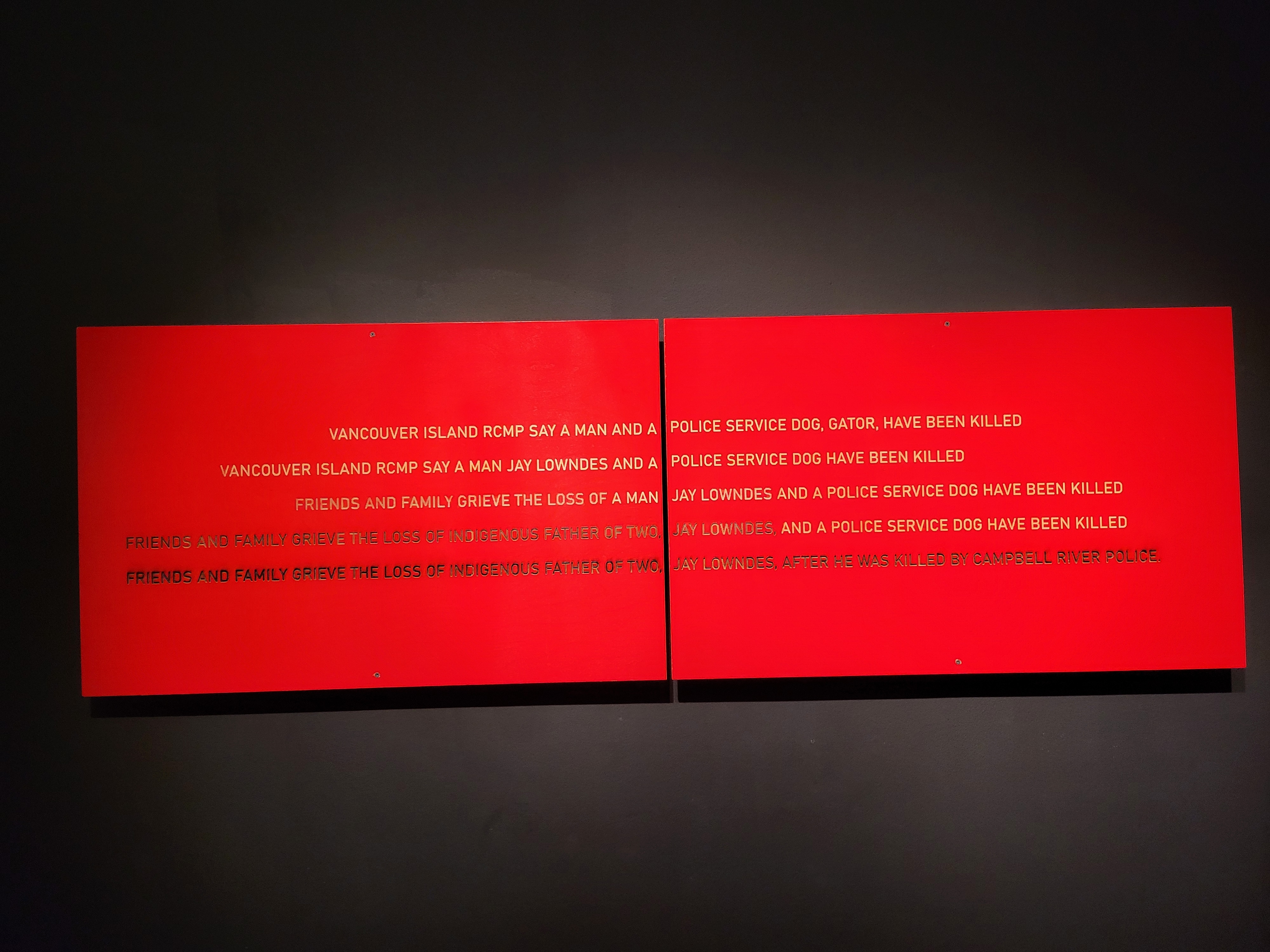 Red panel.
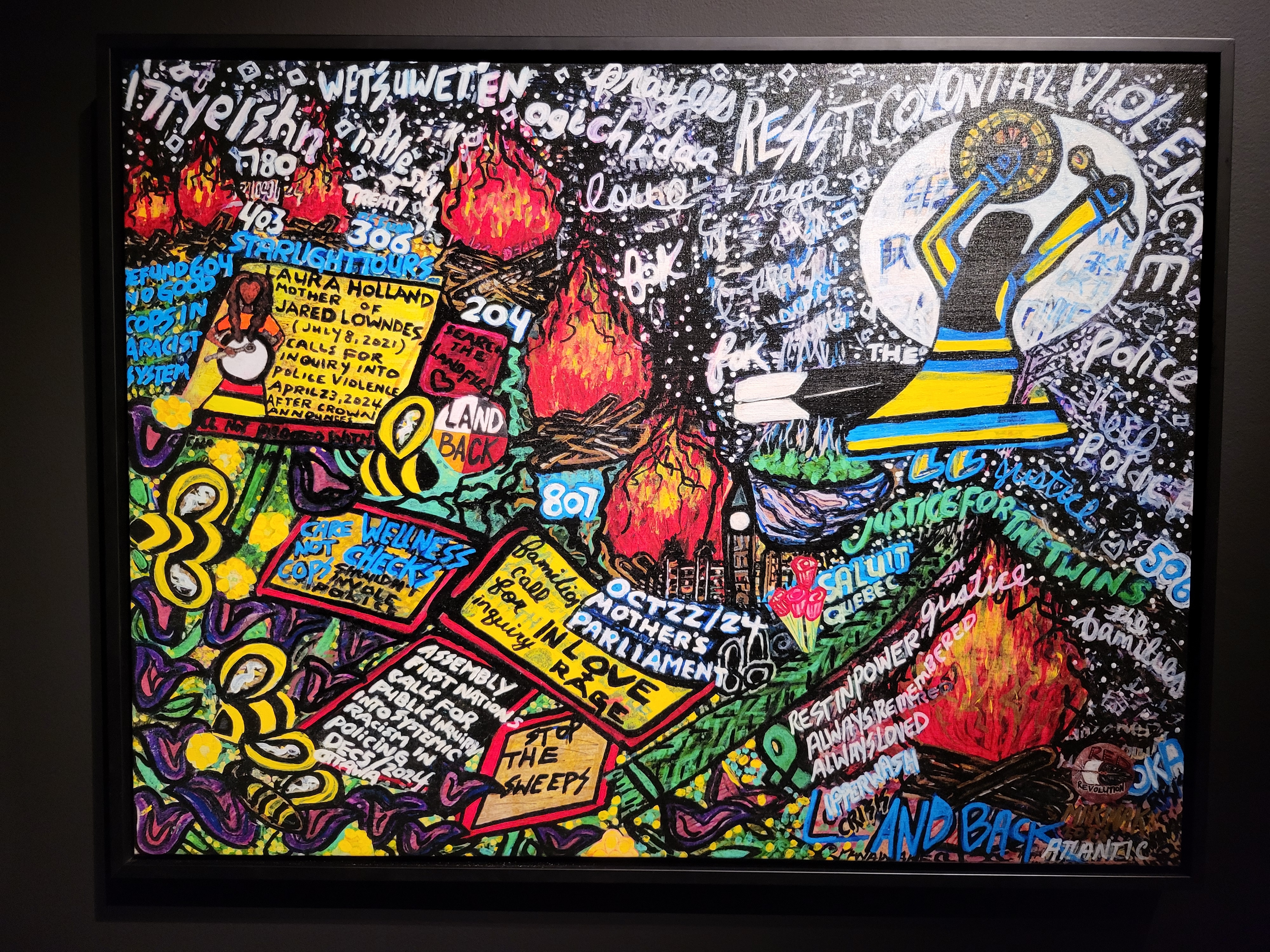 Intersecting police violence.
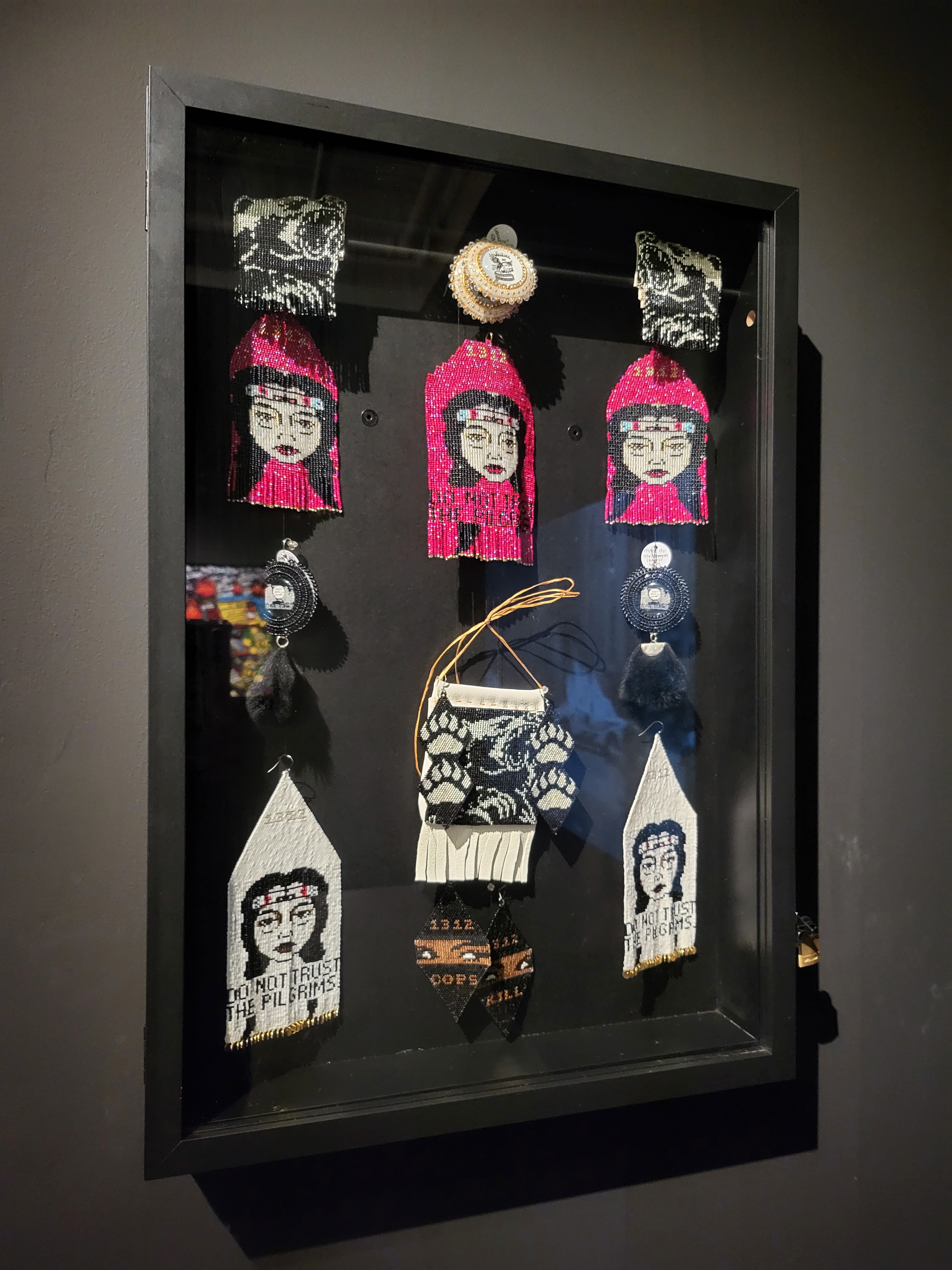 Beaded earrings.
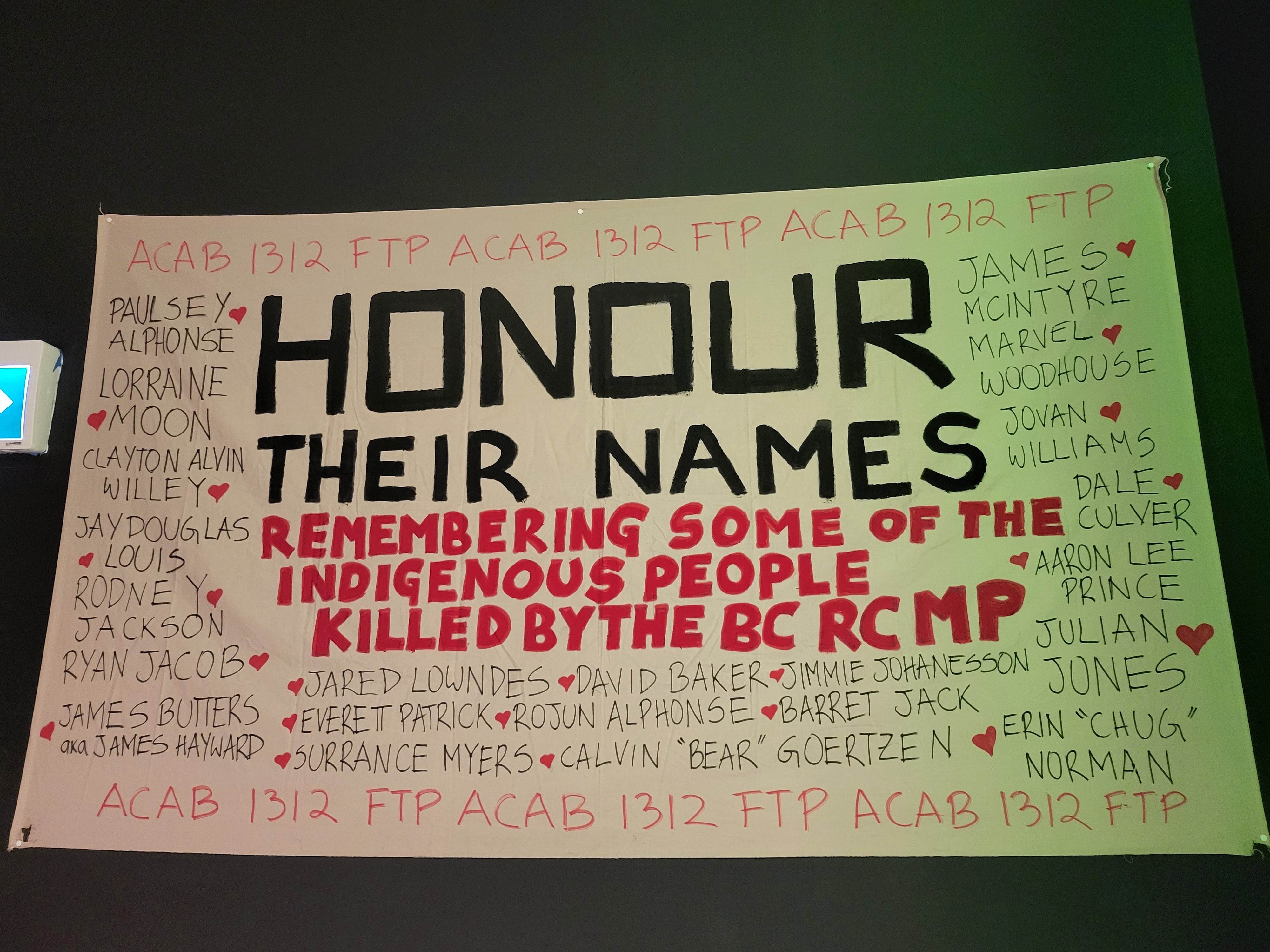 Honour their names banner.
October 22 is the Day of Protest to Stop Police Brutality, Repression and the Criminalization of a Generation, a day of actions against police violence and counterinsurgent state terror.
The founding October 22 Coalition states that the mission of the day “is to mobilize those directly under the gun of police terror, alongside those who are relatively immune to state violence, to derail the atrocities of police brutality, mass incarceration, and political repression.”
October 22 actions have been carried out annually since the first mobilizations in 1996, making this year the thirtieth year of actions.
A crucial part of October 22 has always been to provide “a powerful platform for families who had been victimized by police brutality and murder.” It is this centering of families of victims of police murder that was at the heart of the Vancouver October 22 event, “Walk in Gratitude, Write in Empathy: Lenses of Safety in Police News Reporting.”
This event, which included an art show against police violence at Gallery Gachet, focused on upending the copaganda that drives corporate media reporting on police violence. It grew from the organizing work of Laura Holland, whose son Jared Lowndes was killed by RCMP in in Campbell River, British Columbia, on July 8, 2021.
Lenses of Safety in Police News Reporting
In terms of mass media, "copaganda" refers to any and all forms of propaganda that promote policing and/or which provide cover for police atrocities, serving police power and working to normalize policing as a force of capitalist, colonial control. This includes media efforts that downplay or seek to justify police violence, regardless how egregious that violence is. Too few Canadians are aware of the numbers of people killed by cops in this country every year.
This often includes efforts to smear or discredit victims of police violence (such as through focusing on unrelated criminal records, publishing mugshots, etc.) while simultaneously not reporting the violent histories of officers involved, or publishing police commendations but not their disciplinary records.
Police-driven crime panics and fear politics, amplified by compliant media, are examples of copaganda. So too are stories that promote and popularize the “tough on crime” responses preferred by police (which play into increased police budgets, reach and power). Copaganda poses policing as being about community safety rather than the threat to community health, safety, and wellbeing that it is — organized state violence and repression.
Copaganda can take more subtle forms such as simply reprinting police press releases, which gives journalistic lustre to self-interested police statements. It can also involve treating police accounts uncritically and at face value, as if they are accurate, factual, or truthful records, rather than self-serving.
Softball interviews with police officials are also examples, as are fluff pieces (such as those that push police dogs as cute puppies rather than lethal police weapons). It includes stories that treat police promotional events and activities (like awards ceremonies, “charity” events, sports tournaments, etc.) as newsworthy.
Copaganda can also involve the privileging of police voices on issues over those of community members. In terms of lethal police force, it can involve producing stories that exclude families while including police interviews and statements. It can also include focusing on police concerns or “trauma,” rather than on the trauma police have inflicted on people and communities.
Speakers called out copaganda in media and the social harms it helps to inflict and perpetuate. They also provided examples of responsible media and reporting that involves empathy and compassion for victims of police violence and their families, while critically analyzing policing. Accompanying visuals highlighted the helpful and harmful reporting patterns.
Walk in Gratitude: Write in Empathy
The featured speaker, and driving force behind the event, was Laura Holland. Laura Holland and Justice for Jared have organized against police violence and for justice for families whose loved ones have been killed by cops since Laura’s son Jared was killed. Co-panelist Meenakshi Mannoe reminded those in attendance that many of us have been coming out for actions and events precisely because of Laura Holland and her relentless pursuit of justice on her terms, which she has been doing under the most devastating circumstance.
Laura started her talk by pointing out that police and the state are involved in so many harms — missing and murdered Indigenous women, girls and Two Spirit people, street sweeps of unhoused people, attacks on land defenders, and more. Art works on display expressed these interconnected forms of police violence.
Laura stressed that families who have had children taken through police violence need to meet more often. She has met so many mothers of children killed by police. In her words, they share a bond.
Jared was dehumanized in the press after he was killed and this dehumanization continues. Only days before the event, I was set upon by trolls on social media for posting a memorial message about Jared. Trolls repeat media discourses from the days after the killing that gave more respect to the police dog that was deployed against Jared than for the young Indigenous man killed in that deployment.
For Laura, there is no healing from this. The pain is always there. She only wants her son back.
Laura stressed that there can be no reconciliation, because there was no conciliation in the first place. What is needed is redress and that is what she seeks.
In the view of journalist and fellow panellist, Odette Auger, journalism means being a human connecting to other humans. For her, we all have a connecting thread. Journalism should be of the people and for the people. Laura noted that Odette was the first media person to ask Laura who Jared was as a person, what he was like as a child, and gave Laura the chance to say that Jared was Wet’suwet’en.
Reflecting on the role of journalism, Meenakshi Mannoe offered skepticism. For her, the last two years of coverage of genocide in Gaza have to make us question the role of media, how it operates and what it means.
Too few journalists really see, hear, or feel the families of people killed by police. Community engaged journalism is incompatible with capitalist media production and circulation. We need to build our own platforms and infrastructures. The so-called social media are themselves capitalist institutions built on exploitative frameworks. They are, in reality, anti-social.
This was a powerful event, providing useful tools for countering the interlinked structures of state violence and capitalist media. October 22 is a reminder that every day must be a day against police brutality.
Jeff Shantz is a long-time anti-authoritarian organizer, researcher, and writer who lives and works on Kwantlen, Katzie, and Semiahmoo territories (Surrey, British Columbia).
Please subscribe to The Media Co-op's newsletter!