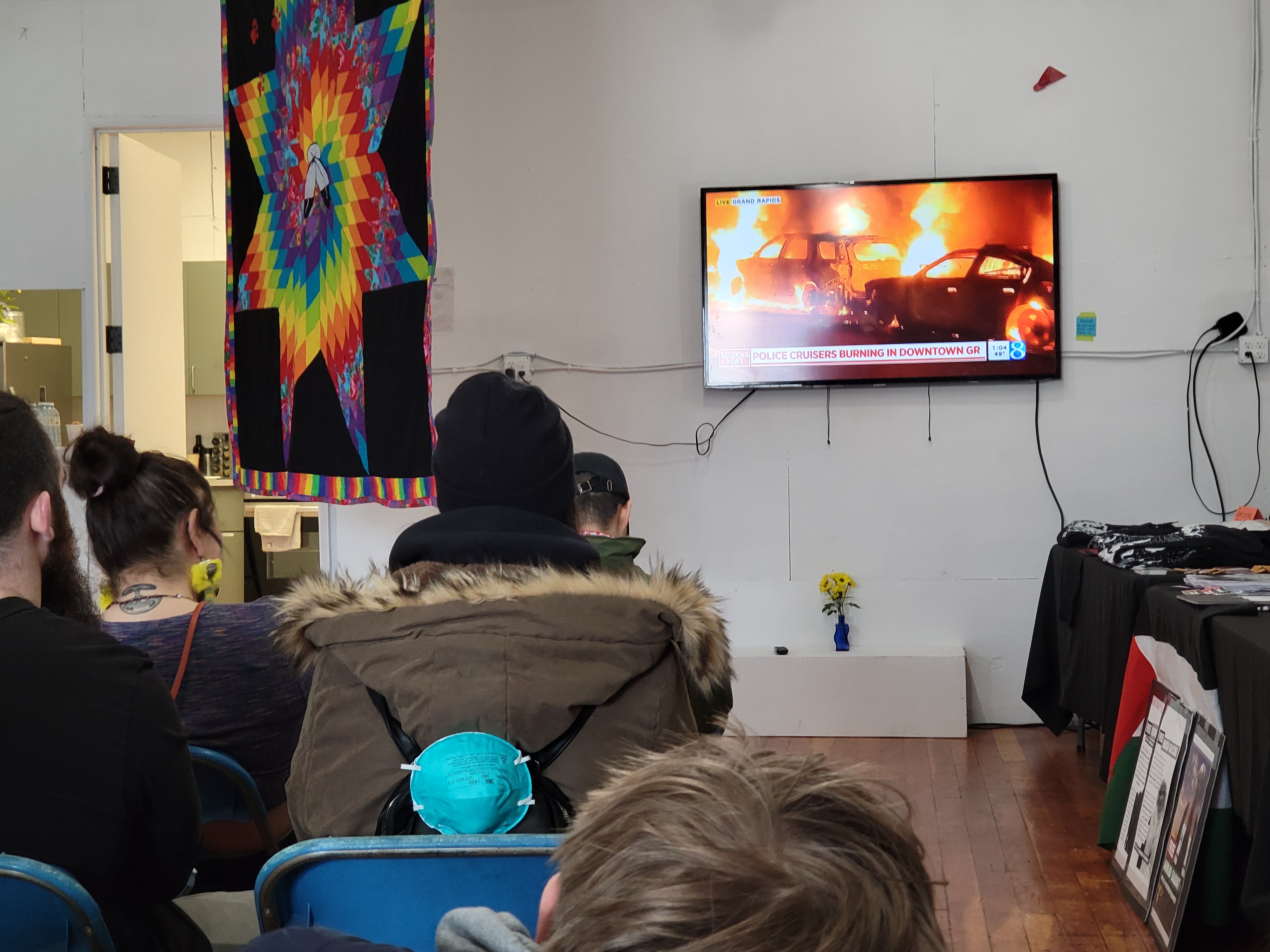
 Crowd watching burning cop cars video.
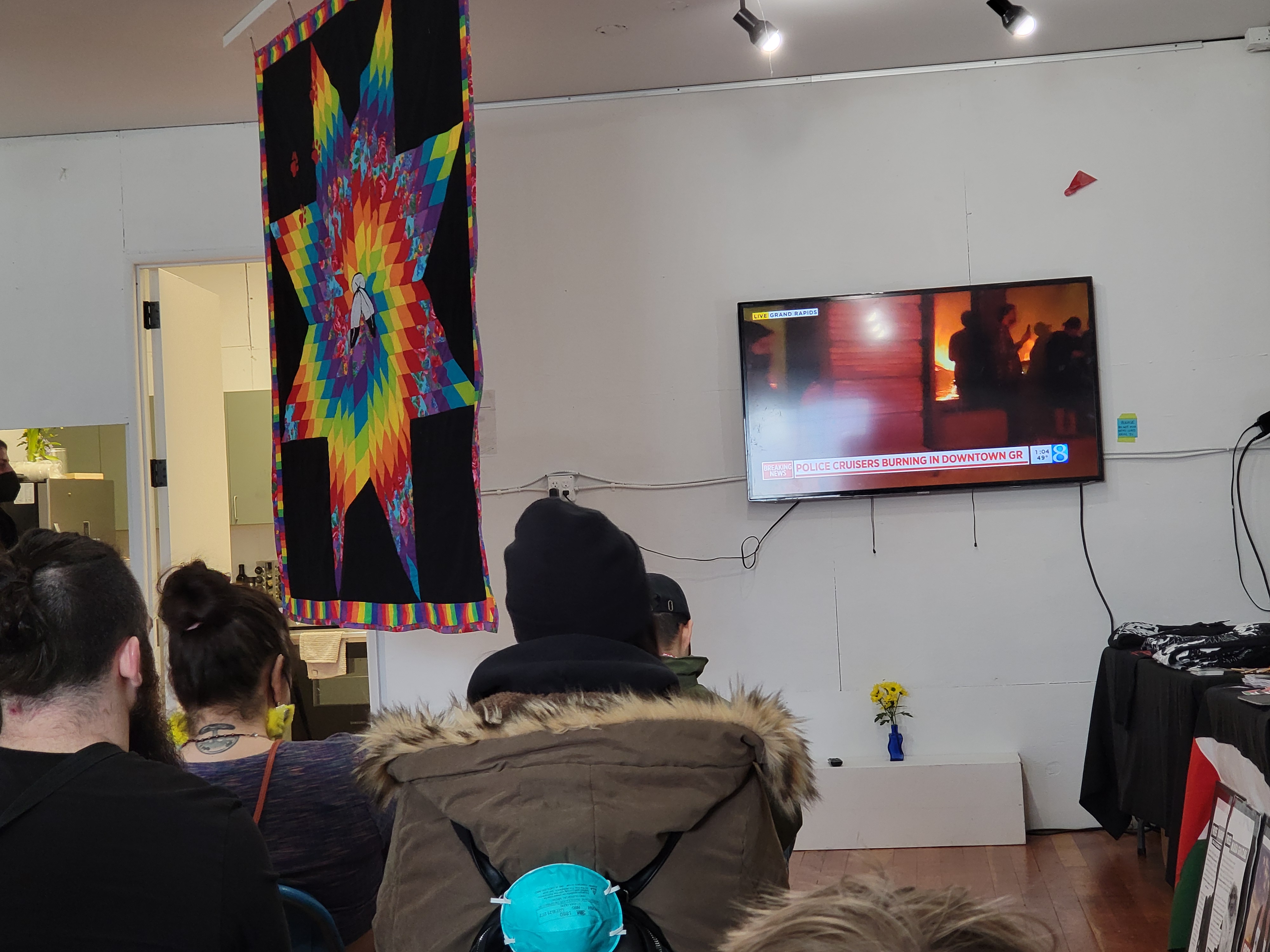 Crowd watching burning cop cars video.
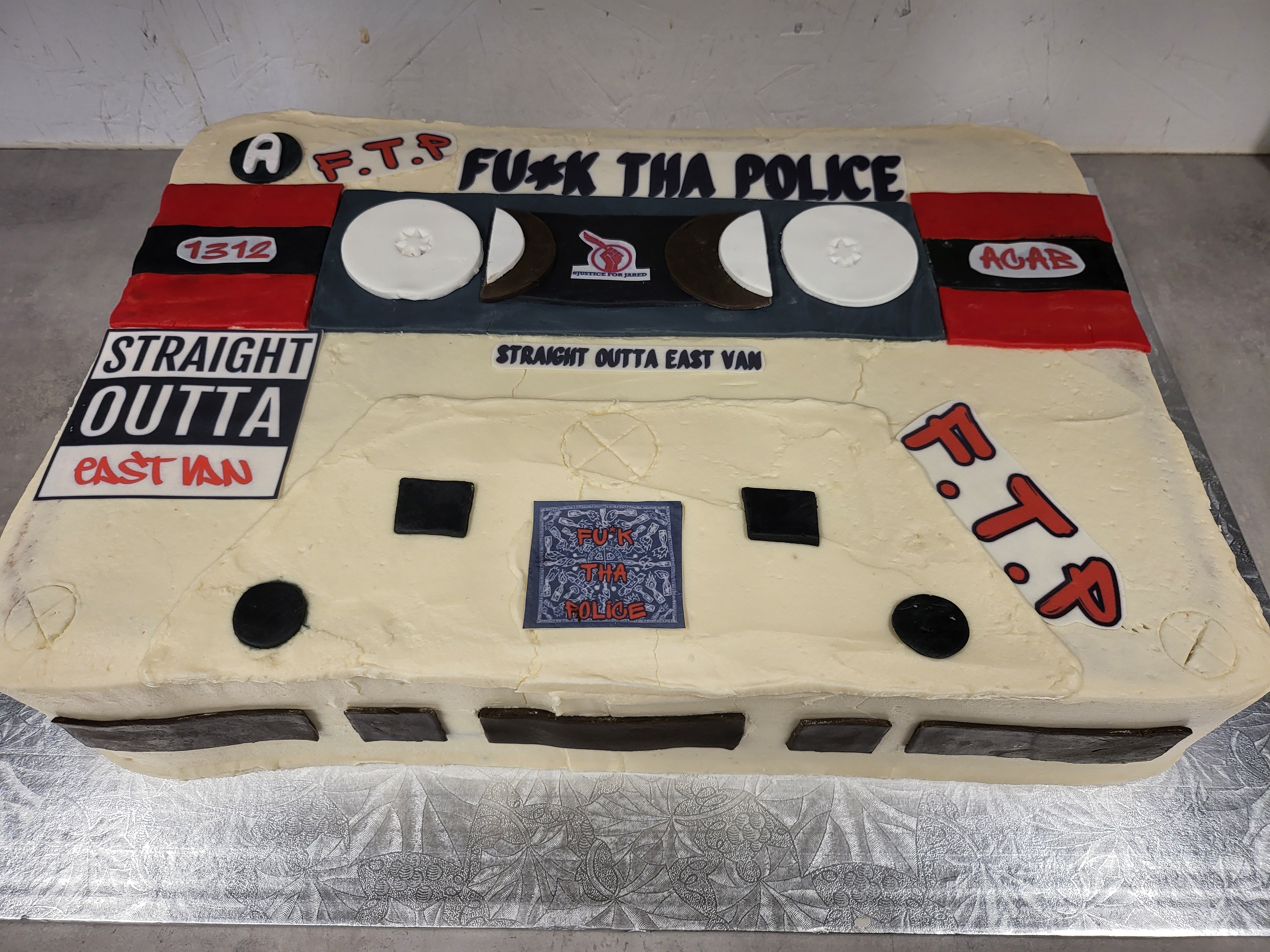 FTP Cake.
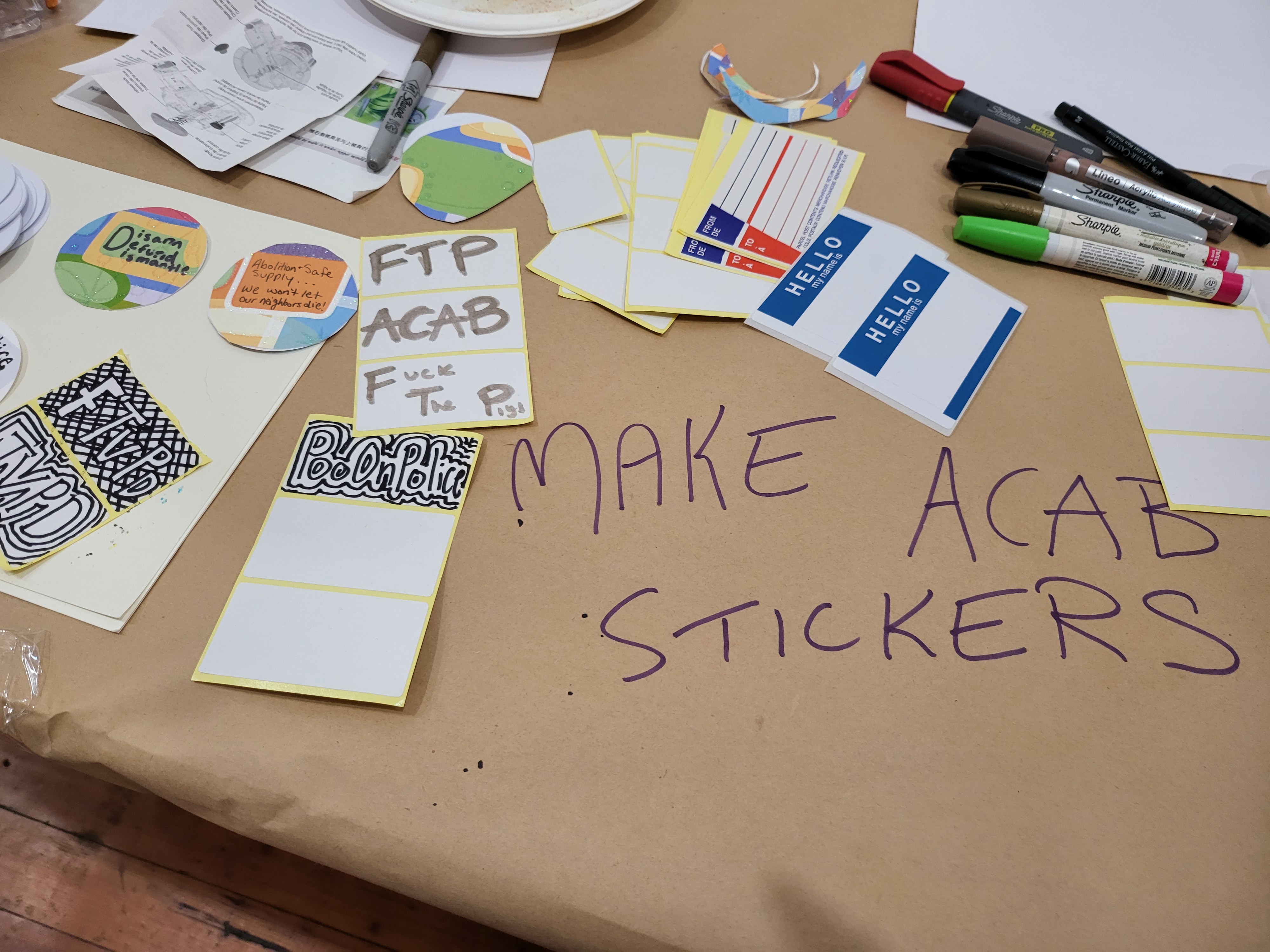 ACAB sticker making table.
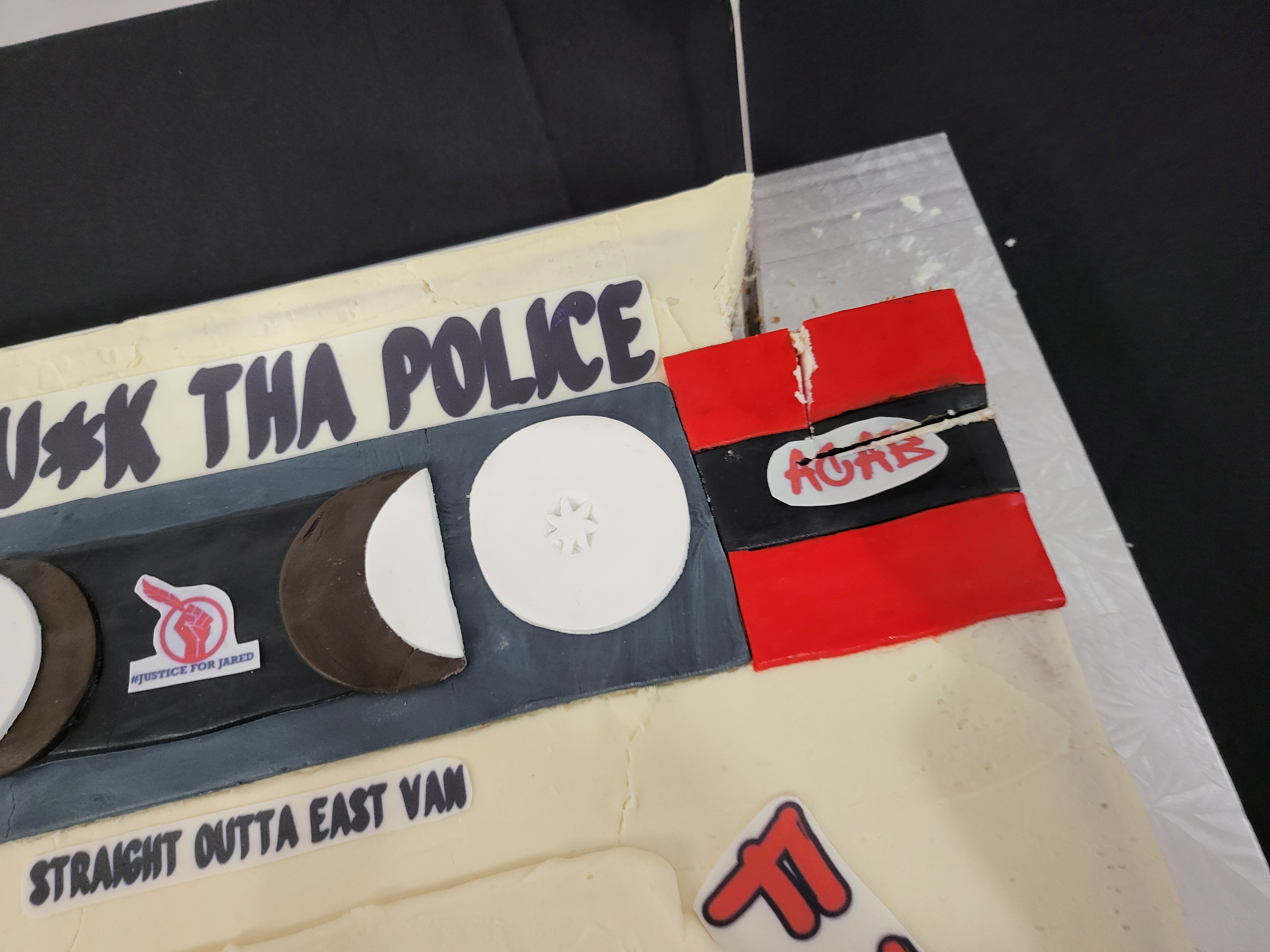 FTP cake being cut.
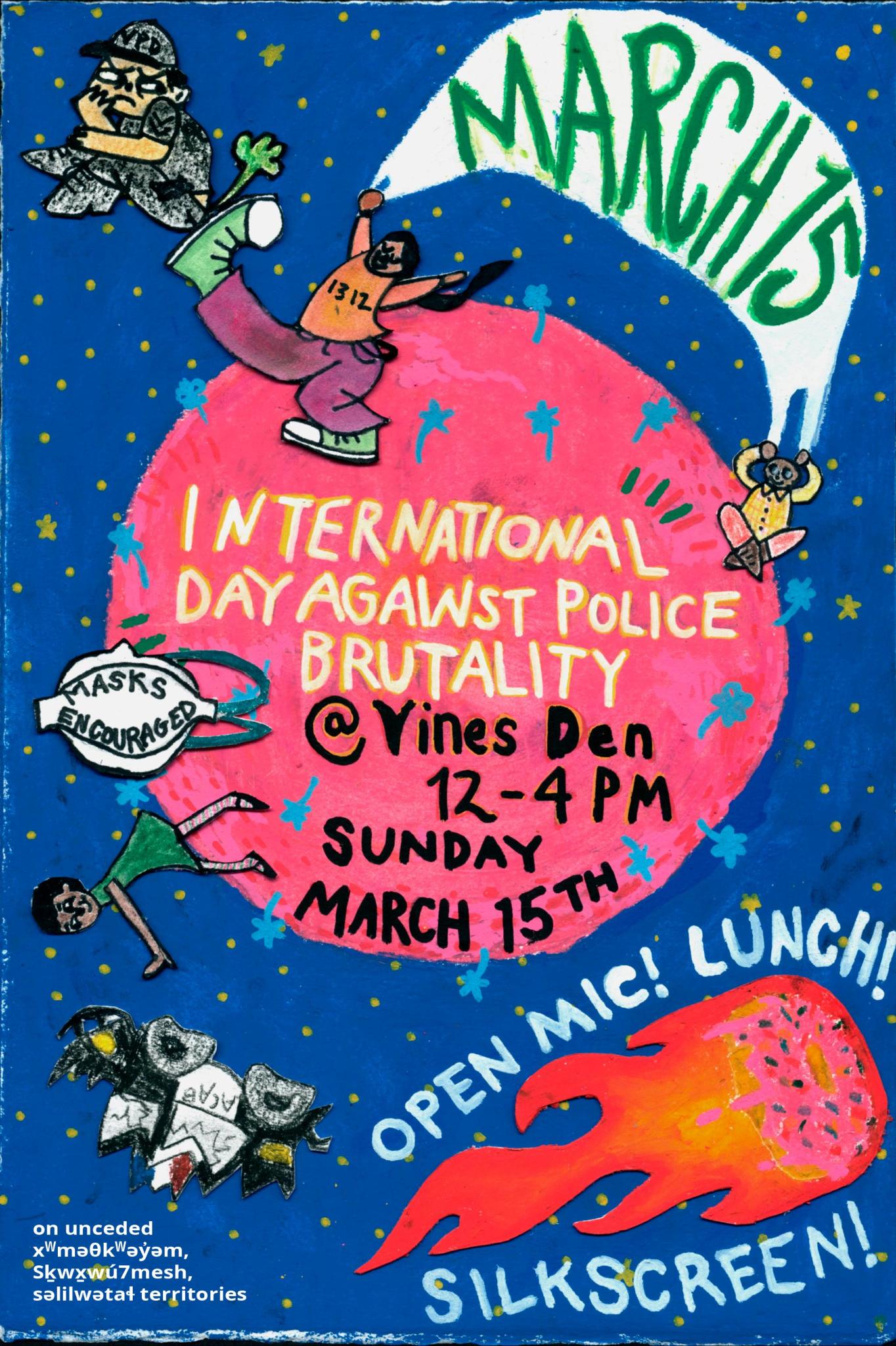 International Day Against Police Brutality Poster.
March 15 is the International Day Against Police Brutality (IDAPB). Originating in 1997, 2026 marks the thirtieth March 15th day of action and solidarity against the violence of policing. The first IDAPB actions were organized by the joint work of the Montreal-based Collective Opposed to Police Brutality (COPB) and the Black Flag group in Switzerland. It has since become truly international, with events ranging from rallies and memorials to direct actions happening around the world.
Again this year, events were organized in several cities across (and against) the occupying Canadian state, including here on the unceded territories of the xʷməθkʷəy̓əm (Musqueam), Sḵwx̱wú7mesh (Squamish), and Sel̓íl̓witulh (Tsleil-Waututh) Nations in so-called Vancouver. The day of art, agitation, and cop mockery was held at Vines Den in the city's Downtown Eastside.
Policing is Brutality
Policing is, by its very nature, brutality. It is, at all levels in so-called Canada, a force of ongoing colonialism and social war. The function of policing is the defence of capital, securing and maintaining conditions of private property, exploitation, and accumulation. This is done through violent, ongoing dispossession and displacement of Indigenous peoples and repression and social control of land and labour. Eliminating police brutality means the elimination of policing itself.
At least 11 people have been killed by Canadian cops as of March 15 this year. In 2025, at least 94 people were killed in Canadian police actions. In 2024, at least 100 people were killed. There were at least 97 police-involved deaths in Canada in 2023, while in 2022 there were at least 117 police-involved deaths.
At least six people have been killed in Metro Vancouver since last March 15. This includes two people killed by Vancouver police, two people killed by the Surrey Police Service, and two people killed by Burnaby RCMP.
International Day Against Police Brutality Vancouver
Many of the organizers of the March 15 event have been active in doing some very heavy abolitionist work, particularly around supporting families of people killed by police and organizing a “people’s tribunal” to bring accountability to cops, in a way that reflects how communities see accpountability – something that can never be provided by the state. That work is painful and draining. Organizers wanted a day that, without losing focus on the brutality that is policing, would serve to energize, uplift, and inspire people to take action against police. We wanted to emphasize the vitality of our opposition to police and fan the flames of desire for abolition, to enact our rage, to arm our joy, to mock cops going boom.
We wanted folks to have an opportunity to create their own agitational art, so a varied art table was a big part of the day, with materials for collage, stickers, posters, and button making all available. Many who attended took the opportunity to make some wonderful pieces. The hope was that they could fill the streets with anti-cop art. There is so much creativity in our communities, and it was fabulous to see people not hold back.
The day’s events started with a viewing of an incendiary video compilation of resistance to police, along with a few funny clips of cop pratfalls. The intention was to show that cops are often fought, and beaten, that they can be put on the run by communities fighting back...and, of course to laugh at cops “getting rekt.” Sometimes movements, caught up in a habit of performative and symbolic marches and rallies with their own marshals (or “peace police”) seem to forget that police are enemies of movements. And they are enemies who can be beaten. We wanted to show examples of that. People can, and do, fight cops in the streets. And they do win. This included examples from local resistance to police in the streets.
Following a lovely meal with energetic conversations buzzing throughout the room, we enjoyed poetry, some rants, and thoughts on the awfulness of policing in an hours-long open mic. Big thanks are due to abolitionist organizer Meenakshi Mannoe for hosting the open mic and for regaling the crowd with some pointed stand-up comedy.
The event concluded with a session of theatre of the oppressed related to intervening against police authority. Thanks are due to Angelo for the initiative and for facilitating.
On the whole, this was a high-spirited day of connection, energy, inspiration, and, for some, revitalization. New relationships were built, new ideas forged. It was a bit novel for recent abolitionist events in the city and proved to be highly rewarding.
Winnipeg Actions
In Winnipeg, several dozen people held a rally outside Winnipeg Police Service headquarters and then took to the streets to march downtown. The march stopped outside of the Canada Life Centre, where the Winnipeg Jets were playing the St. Louis Blues.
Participants remembered Eishia Hudson, a 16-year-old girl who was shot and killed by police on April 8, 2020, and Afolabi Stephen Opaso, a 19-year-old University of Manitoba student who was shot and killed by police on New Year’s Eve in 2023.
Notably, an inquest into Hudson’s killing is currently happening. The cops who killed her and Opaso have already been let off. The province’s chief medical examiner has announced there will be an inquest into Opaso’s killing.
Winnipeg police pre-emptively shut down in-person reporting at the station for two hours out of concern over the rally.
Longueuil Actions: "Justice for Nooran"
In Longueuil, Quebec, several hundred people protested at the offices of the Bureau of Independent Investigations (BEI). Longueil was the site of the police killing of 15-year-old Nooran Rezayi on September 21, 2025. The BEI offices were chosen to call out the oversight body for its dismal record of investigations and abject failure in holding police to account. In its nine years of operation, there have only been two cases where BEI investigations have led to charges against officers. This is out of over 450 investigations. It is so bad at serving the community that it remains the only oversight body that does not even make its investigation reports public. Only days before IDAPB, the BEI announced that they had submitted their report on the killing to the Director of Criminal and Penal Prosecutions (DPCP).
In the aftermath of the killing of Rezayi, Longueuil police have come under intense scrutiny for their actions during and following. So troubling has been their behaviour that the city’s mayor has called for an investigation into the force. For one, it took over 90 minutes for police to report the shooting to the BEI. In addition, Longueuil police officers met with, and may have intimidated, witnesses. Only days after the killing, Longueuil police arrested a 15-year-old who was angry about their actions.
Witnesses to the IDAPB action reported that around 50 riot police from the Sûreté du Québec formed a line in front of the BEI building. At the same time, several dozen Longueuil police officers Agglomeration Police Service (SPAL) were deployed at metro stations and at the nearby university campus. Others reported police vehicle patrols, an LRAD (Long Range Acoustic Device or sound cannon), spotters on the roofs, police drones, and an SQ helicopter. Cop overkill.
IDAPB is always, at its core, abolitionist. All of these actions share the belief that there is no reforming a system designed to kill in the name of property and profit. Police are a lethal threat to our communities. Policing is, by definition, brutality. That is why the capitalist state created, empowers, and deploys police. It is what the state expects of police. Ending police brutality means ending policing.
We must come together as community to care for and support each other. We must envision the end of policing and we must organize, in our diversity and creativity, to make it so.
Jeff Shantz is a long-time anti-authoritarian organizer, researcher, and writer who lives and works on Kwantlen, Katzie, and Semiahmoo territories (Surrey, British Columbia).
Please subscribe to The Media Co-op's newsletter!