
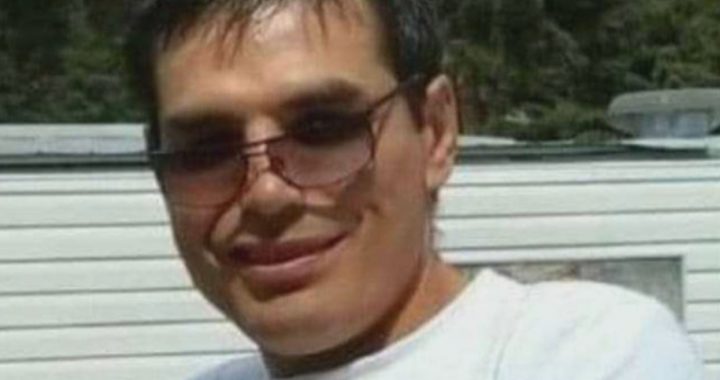
 Everett Patrick.
In 2020, Everett Patrick, a 42-year-old Lake Babine Nation man, died in hospital after having been left and observed motionless for most of four hours on a hard cell floor in Prince George. His cause of death was later determined to be a brain bleed caused by blunt force trauma. For six long years, his family and loved ones have waited for answers to their questions about how this could have happened. The coroner’s inquest into his death in RCMP custody left many of those questions unresolved. However, it painfully showed the callous cruelty at the heart of colonial systems in Canada.
I attended the entire coroner’s inquest into Mr. Patrick’s death, over three days beginning on March 30, as I have for numerous other inquests into killings by police. Sadly, my experience told me to expect that there would be little justice in it for the family. Coroner’s inquests cannot assign blame and have no mechanism for accountability, even where the jury finds homicide occurred. The process is often re-traumatizing for loved ones, as it was in this case.
What it did provide was a glimpse into the everyday banality of evil that characterizes systems that make deadly assumptions about Indigenous people. It is an evil that assumes someone with multiple apparent head injuries, who was recently struck in the head by police, is intoxicated. It is an evil that can watch someone fall twice within a matter of minutes, throw that person in a cell, and then watch them become rigid, while not so much as asking if they are OK.
Systems determined this to be an accidental death. But this is not an accident – it is a probability outcome of careless systems acting as intended.
Cops Are Not Care
Abolitionists stress that policing is not care and it is not about wellness. Policing is violence. And specifically, it is racialized class violence by the state within racial capitalism. Policing is about containment and control, and this principle infuses all aspects of policing from surveillance, to intervention, to arrest, to detention. It is an anti-care, inhuman system.
This first principle of policing is revealed painfully and poignantly throughout the coroner’s inquest into Everett Patrick’s death. What was tragically lacking was even a basic human consideration for human well-being. Even more, there was an absence of basic compassion.
The details of Everett Patrick’s time alone in an RCMP cell were nothing less than devastating. He had just been attacked by a police dog and beaten, and was already injured before that. Twice during processing at the cells, he fell to the floor. Then he was carried by his hands and feet and dropped on the hard floor in a cold cell. He was wearing only a T-shirt and pants, no shoes.
He never got up from the floor the entire time he was in the cell. For more than two hours, from 2 PM until after 4 PM, Everett Patrick’s already limited movements slowed down from little to none. He never did get to a sitting position. He never once stood up. They watched him on the floor for four hours. And not a single person asked him even once how he was doing. No one. Not once. They only checked for breathing. As the family lawyer pointed out, video checks of a prisoner can only tell if someone is breathing, not their health or wellness.
The inquest’s key moments came when the lawyer representing Mr. Patrick’s family questioned police and the cell guard on this absence of basic humanity. The lawyer noted that over four hours, nobody even asked Mr. Patrick if he was ok. No one asked if he was hungry or nauseous. No one asked if he could get up. No one asked about his sight.
The guard on duty at the time, Kara Haack, objected to this line of questioning before saying that speaking to prisoners is not something they're expected to do as part of their checks. In her opinion, speaking to prisoners can be inconvenient.
The lawyer responded that that is the problem – how things have been done is not appropriate. He then posed a hypothetical: You're working in a restaurant. You're not a medical professional, not expected to provide health care. How long would you stand by and watch while someone was lying on the floor next to a table?
This sent a jolt of recognition through the courtroom. Because, of course, any reasonable person would find it to be atrocious if no one reached out to a person in such a condition in that case.
Not acting is only viewed as acceptable because someone is a prisoner in a cell. The guard only, again, got upset by this being pointed out. She believes they all "do their very best."
Police and guards provide no care, no compassion as regular people would define them. He is left alone for hours with his injuries. Left for hours on the floor. No one comes in physically to show even the slightest human consideration. By the time someone does, he is already rigid.
For police and guards, people are prisoners first (only?) and this conditions a perspective which sees them as trouble, as untrustworthy, as unreliable, as unbelievable. Carceral agents assume the worst and act accordingly, with often lethal consequences.
Deadly (Assumptions About) Games
This conditioning to expect and to see the worst in people is engrained through socialization into police cultures. It takes emblematic form in notions of the “thin blue line” in which cops see themselves as the line between civilization and disorder, good society and “bad guys.” This shapes their interactions with people they come into contact with. Everyone is out to get them; everyone is out to “game” them. Institutional racism and class profiling have deadly consequences.
This was on display numerous times throughout the inquest. RCMP officers and the cell guards assumed that Mr. Patrick was refusing to comply or playing games. The officer who brought Everett Patrick to the detachment, Constable Ross Browne, told the watch commander that Mr. Patrick did not want to get up, with no suggestion that perhaps he could not get up. The lawyer noted that there was a full hour where they could not tell whether it was a matter of could not or of would not. This difference matters. He then asked if guards or cops were biased towards believing non-compliance because it put blame on prisoners. The judge again admonished him for being confrontational.
The officers viewed his falls as intentional. Assisting RCMP Constable Lara Levey also called his falls non-compliance in another apparent attempt to shift responsibility to Everett Patrick from her fellow officer Browne. There was reportedly not even a discussion about calling EMS after his two falls. Despite those two falls, Browne and Levey simply assumed he was being non-compliant.
The watch commander, RCMP Inspector Chris Riddle, suggested that they were not falls but “slumping,” even though he admitted that he did not see them.
The family lawyer rightly asked Inspector Riddle why no one asked Mr. Patrick what was wrong with him after he fell twice. “What is the matter?” “Why are you having trouble standing?”
Riddle said that someone who cannot walk at cells would be assessed on a case-by-case basis and this would “depend on if they were passively resistant.” When asked if a person who falls and thereafter cannot get up would be assumed to be acting this way as a result of drugs or alcohol, he again described it as “slumping” and said he would put that in the passively resisting category.
The lawyer suggested that a fall or slump does not tell you what caused the fall or slump. In response, Inspector Riddle claimed Mr. Patrick slumped to the ground because he was upset about something. He conjured this assumption freely despite saying earlier he did not want to make assumptions about police actions. Then he added, oddly, that he would not want a guard to enter even during a hanging for fear of guard safety, which he explained by suggesting the possibility of “fake hanging.”
Guard Haack even acknowledged that at no time was Mr. Patrick oppositional. She says he seemed to accept that he was being held. So why the assumptions?
Colonial Institutional Assumptions and Lack of Care
Institutions in Canada bear the marks of their ongoing colonial character. This is true not only of strictly carceral institutions but also of institutions within the so-called “helping professions,” such as social work and health care. In fact, health care is a central perpetrator of colonial practices. Numerous cases document racism, particularly anti-Indigenous racism, and coloniality within Canadian hospitals, as well as community-based health care.
The coroner’s inquest into Everett Patrick’s death shows multiple instances of this. One central issue involves assumptions of intoxication or effects of drug use when dealing with an Indigenous person. While this was not an intoxication arrest, racism often plays a part in such arrests, with deadly consequences. We see this often in police engagements involving Indigenous people. Police attribute health crises and symptoms of underlying health conditions (such as diabetes or concussions) to intoxication by drugs or alcohol.
At the hospital, nurses had said they “believed” Mr. Patrick had consumed drugs, but this was not confirmed. Constable Browne said he believed Mr. Patrick's falls at the cells were game playing or effects of coming down from drugs. He did not consider that it might be something more. The lawyer asked him to explain why he was prepared to consider one internal cause that he could not see – drug effects – when he was not prepared to consider a different internal cause – head injury.
The doctor who spent two hours examining Everett Patrick at Prince George Hospital after his arrest said he showed no signs of intoxication.
During his arrest, a police dog was deployed against Mr. Patrick. He suffered several dog bites which were later treated in hospital. The IIO found that a dog handler came “hands on” to Mr. Patrick and struck him on the side of the head. He was then held down by two offers initially, before other officers joined to put him in handcuffs.
Everett Patrick was seen at the scene by two paramedics who assessed the open cuts on his forehead and dog bites on his leg. He was transported to hospital by a police officer, not by paramedics. He was reportedly not transported by one of the involved officers but by an active-duty officer. It is unclear if that officer knew about the head strike by police or anything else about Mr. Patrick’s injuries.
The doctor at the hospital noted his previous head injuries but felt there was no need to do a CT scan, which would have revealed a brain bleed. Mr. Patrick was released back into RCMP custody and prescribed medication. Neither doctors nor nurses gave instructions for care to police. Only days before his death, Mr. Patrick had attended Prince George Hospital reporting an injury to his left eye. The hospital treated this, so had a record of previous head injury.
The emergency doctor who saw Mr. Patrick after his arrest did not ask police anything about what had been done to him to get him in the injured state he was in. The doctor did not tell police officers to look for symptoms of a concussion.
The Crown decided not to pursue charges in part because police were not provided information by medical doctors at hospital. They assumed then that the police had no way of knowing of the health conditions and how the falls might have impacted this.
Why were detachment officers not given any information from arresting officers about his injuries or about the possibility of harms resulting from the blows to his head during arrest? Why was the hospital not informed?
The IIO stated that they believed the hospital received any information about the blow to the head. The IIO could not answer if paramedics were told anything about injuries inflicted by police apart from the obvious dog bites.
The family lawyer asked the doctor if someone who falls twice in a short period of time, who is not intoxicated or elderly, should be taken to see a doctor. The doctor agreed that that would be an appropriate decision, the person should be taken to hospital under those circumstances. Police and guards never did.
Prisoner logs did not suggest at any point that Everett Patrick was intoxicated. So why the assumptions about an Indigenous man?
The absence of care continues for grieving families after the death of their loved one. In her gut-wrenching testimony, Jennifer Alexander, Everett Patrick’s wife, said that she did not even hear about his arrest until days later. She also recounted that the hospital did not want to let her and their children see him. She told the inquest that, shockingly, they told her that he had no family, but they were his family. She explained that she had to fight to see him.
She also told the inquest that she was only allowed to have one hour with him. And seeing him in the hospital bed tore her apart. She said that the hospital did not even properly explain his condition to the family. They wanted to take him off life support before adequately discussing it with her. She said she felt pressured to take him off life support.
She also stressed the lack of information and answers that families receive when a loved one dies in police custody. She told the inquest that the family has not received answers after six years, despite an investigation and request to the Crown to consider charges.
An Immune System for Carcerality
Canadian policing is colonial and racist. This is true at the very core of policing, and it derives from its origins as an institution of colonial dispossession and control. This is especially obvious for the RCMP, the historic military force of Canadian colonialism. It is why the force was created, after all. At the same time, observance of numerous inquests, as I have done, shows clear examples where even the professed neutrality is breached – they are always the efforts by family lawyers to get closer to the heart of deaths involving police.
The coroner’s inquest is in many ways an immune system for carcerality. While emphasizing neutrality in all of its statements, it never is. Nor can it be. Neutrality from any government agency means, in practice, system reinforcement (acceptance of systemic aims, legitimacy, effectiveness, purpose, etc.).
Of course, the entire process is biased against families and in favour of police. This occurs largely through the resources that police have at their disposal and the lack of resources that families are left with.
There is also a disregard for basic consideration for families. Coroner counsel told Jennifer Alexander that they appreciated her extensive recounting of Mr. Patrick’s life, then immediately cautioned the jury not to rely on her statements about the RCMP. Coroner counsel prevented her from introducing a photo of Everatt Patrick in hospital, saying it could prejudice the hearing.
At several points the family lawyer was chastised, warned, and shut down. These admonishments came precisely at those moments when he was getting close to challenging the system’s operations and the numerous acts that showed its inhumane character. Among these were instances where he asked various witnesses if they could think of any place other than police cell where someone unable to get up for hours would not be the subject of urgent inquiry. In these moments, the family lawyer was admonished by the judge for being inflammatory. At various points, the coroner counsel pressured him about time and limiting his questions.
In this inquest, the jury did not even hear from the officer who sicked the police dog on Mr. Patrick or who struck him in the head and failed to prevent his fall at the arrest scene. We did not hear any evidence on whether or to what extent this officer was interviewed by the IIO. This seems like a fairly significant oversight, given the nature of the head injury that Mr. Patrick eventually died from.
The IIO representative even rationalized for the cops and guards, saying they are doing what they can with what is available to them. They added that these are limitations that prisoners “have to live with” (even if they do not, in fact, live).
The death of Everett Patrick in police custody tragically shows the limits of police oversight in British Columbia across the carceral continuum. The Independent Investigations Office rarely refers police involved in civilian deaths for charges. In 2024-2025, the IIO referred 12 investigations to Crown Counsel for consideration of charges, out of 174 new investigations. In 2023-2024, there were only seven referrals out of 169 new investigations. Mr. Patrick’s case shows that even when the IIO recommends charges, the Crown typically chooses not to proceed. In fact, the Crown has only taken two such cases to trial, ever.
This is a Canada-wide issue. Research shows that between 2000 and 2017, of the hundreds of instances where a police officer killed a civilian in Canada, less than four percent resulted in charges
Accident or High Probability Outcome of Racist Violence Systems?
The jury conclusion of accidental death in no way surprised me. In fact, I told a colleague during a break on the first day of the hearing that my guess was the jury would bring back a finding of “accidental.” This was based on my having directly observed numerous coroner’s inquests over years, and because of the very limited framework (and framing) within which inquests operate.
I would argue, however, that Everett Patrick’s death was no accident. Rather, it was a high probability outcome of systems of carceral violence that are oriented towards coercion and control, not care – especially given that those systems are infused throughout by anti-Indigenous racism and dehumanizing assumptions about Indigenous people.
The jury acknowledged this (again within the limited framework that operates in inquests) by recommending cultural sensitivity training. Of course, we know carceral institutions provide such training and it structurally changes nothing. It was telling, however, that no one who testified could positively say whether guards received such training.
In any event, there is no mechanism for juries to conclude that the system itself has committed homicide. They are dissuaded even from pursuing questions of systemic guilt.
And families are left asking where they can find justice, as they continue to grieve.
Jeff Shantz is a long-time anti-authoritarian organizer, researcher, and writer who lives and works on Kwantlen, Katzie, and Semiahmoo territories (Surrey, British Columbia).